Are you looking for a women's bike or a women's e-bike? At Radfieber, you will find bicycles and e-bikes with a low-step frame or a trapeze frame. In addition, you can choose whether you want a city bike, an urban bike, a cargo bike, or another type of bicycle. Does it have to be a specific color or from a particular manufacturer? The choice is yours!
You can buy everything online too, but at Radfieber you will receive comprehensive advice on the various women's bikes and can test them on site. Just stop by in Cologne, Düsseldorf or Berlin. You can save quite a bit with our women's bikes on sale.
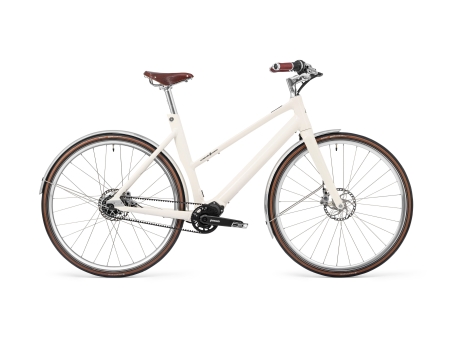 Schindelhauer ANTONIA IX X35 / sahneweiß
.jpg) Schindelhauer ANTONIA IX X20 / salbeigrün
Schindelhauer ANTONIA IX X20 / salbeigrün.jpg) Schindelhauer ANTONIA VI X20 / sahneweiß
Schindelhauer ANTONIA VI X20 / sahneweiß Schindelhauer EMILIA VI/IX X20
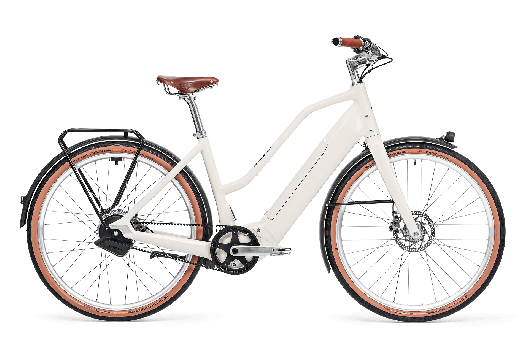 Schindelhauer HANNAH ENVIOLO BOSCH SMART / sahneweiß
 Schindelhauer HANNAH ENVIOLO BOSCH SMART
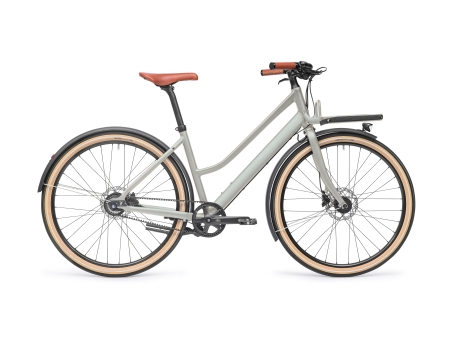 Schindelhauer GRETA / aschgrau
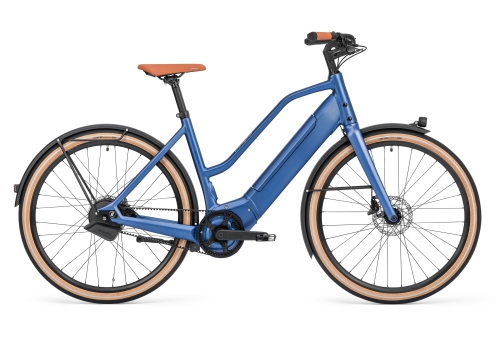 Schindelhauer HANNAH ENVIOLO / perlblau
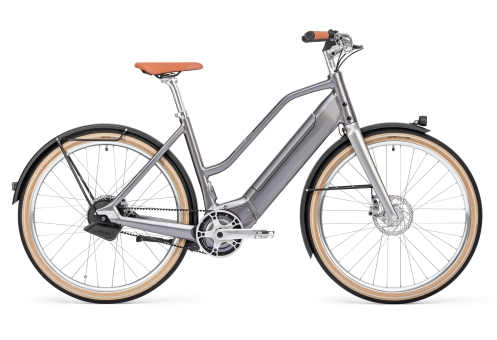 Schindelhauer HANNAH ENVIOLO / titansilber
.jpg) Schindelhauer ANTONIA VI X35 / salbeigrün
Schindelhauer ANTONIA VI X35 / salbeigrün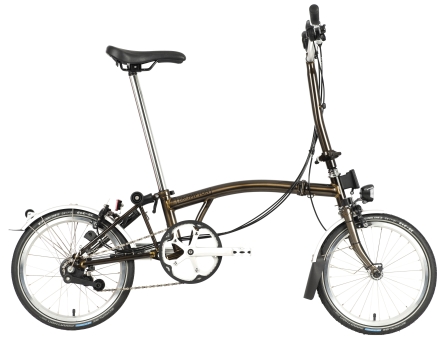 Brompton C-LINE Explore (6-Spd) / High / Gloss Black Lacquer
.jpg) Schindelhauer FRIEDA XI Limited Edition / pearl blue
Schindelhauer FRIEDA XI Limited Edition / pearl blue.jpg) Brompton T-LINE Urban (4-Spd) Mid / Blasted Ti
Brompton T-LINE Urban (4-Spd) Mid / Blasted Ti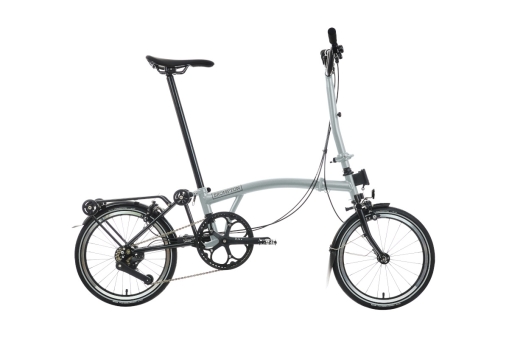 Brompton P-LINE Urban (12-Spd) High / Lunar Ice
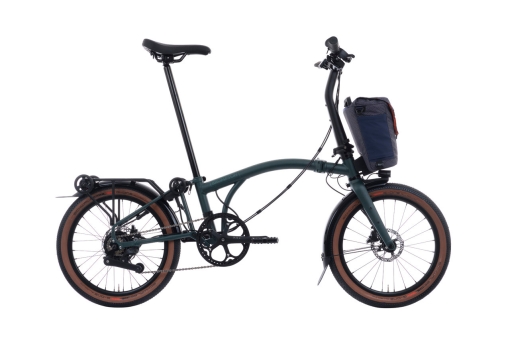 Brompton G-LINE Electric (4-Gear) Green / Mudgard & Rack
.jpg) Brompton G-LINE Electric (4-Gear) Forest Green / Mudgard & Rack
Brompton G-LINE Electric (4-Gear) Forest Green / Mudgard & Rack.jpg) Brompton G-LINE Electric (4-Gear) Traildust White / Mudgard & Rack
Brompton G-LINE Electric (4-Gear) Traildust White / Mudgard & Rack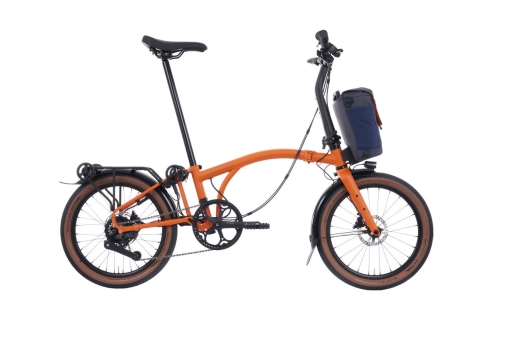 Brompton G-LINE Electric (4-Gear) Adventure Orange / Mudgard & Rack
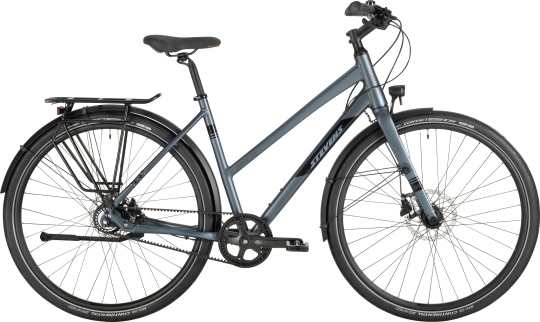 Stevens 2024 COURIER LUXE LT / Granite Grey
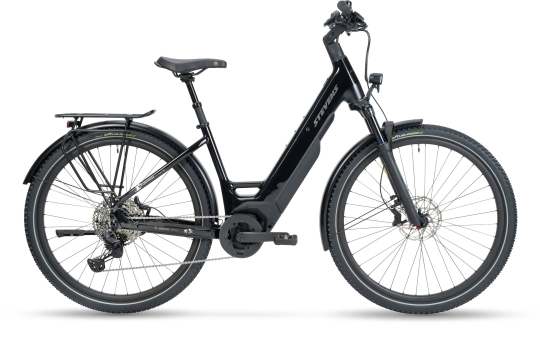 Stevens 2024 E-UNIVERSE 7.7.1 PLUS FEQ FORMA / Yellow Black
The beginnings of the women's bicycle date back to the early 19th century. As early as 1818, the English manufacturer Denis Johnson offered his "Ladies' Walking Machine," a treadle bicycle with a low step-through frame designed to make mounting easier for women in long skirts. The breakthrough, however, came only with the invention of the safety bicycle by John Kemp Starley in 1885. In Washington D.C., William Elliot Smith and Herbert Sumner Owen independently developed the first women's bicycles with a lowered frame – the so-called drop frame – in 1888, to make cycling practical for women in Victorian clothing. On February 4, 1888, the first public ride by women on women's bicycles took place on Pennsylvania Avenue, causing a nationwide sensation. Smith's design, later called the "Dart," is considered the first bicycle specifically built for women and laid the foundation for a new era of female mobility.
The further development of the women's bicycle in the 1890s coincided with the great bicycle craze and had profound social effects. The women's bicycle became a symbol of women's emancipation, as it enabled women to move independently outside the home for the first time. Women's rights activist Susan B. Anthony stated in 1896: "The bicycle has done more to emancipate women than anything else in the world." To make cycling possible in long dresses, button-up skirts, divided skirts, and so-called bloomers emerged. The first woman to cycle around the world, Annie Londonderry, proved in 1894 on a women's bicycle that women were capable of extraordinary achievements. The women's bicycle contributed significantly to the so-called "Rational Dress" movement and sustainably changed women's fashion and self-perception.
The development of women's bicycles with electric motors began in the late 1990s, when the first manufacturers brought special e-bike models with low step-through frames to market. These e-women's bikes combined the proven step-through frame with a powerful battery and motor to make city riding even more comfortable. Especially for commuters and older female riders, electric assistance proved to be a great benefit, as it effortlessly handles inclines and makes starting easier. Today, almost all major manufacturers such as Stevens, Schindelhauer, and Desiknio offer e-women's bikes with state-of-the-art technology, including mid-drive motors, integrated batteries, and intuitive displays. The demand for e-women's bikes is growing steadily, as they represent an environmentally friendly and comfortable alternative to the car and sustainably improve everyday mobility.
Today, women's bicycles are no longer just for women. The low step-through – also called a step-through or trapezoidal frame – has established itself as a practical feature for many target groups. Older people appreciate the easy mounting, commuters benefit from frequent getting on and off in city traffic, and delivery services use this frame style for everyday use. More and more manufacturers therefore no longer market their bikes as gender-specific, but as unisex models with a low step-through. The women's bicycle in its original sense has developed into a versatile city and everyday bike for everyone.


.jpg)
.jpg)
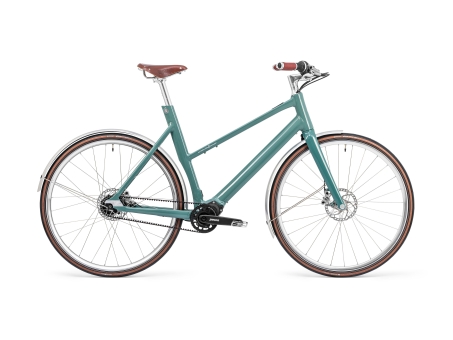
.jpg)