At Radfieber you will find a selection of special triathlon bikes for ambitious athletes and beginners. Our triathlon bikes from Ridley impress with aerodynamic carbon frames, integrated cockpits, and high-quality components for maximum performance on the bike leg. Stop by at Radfieber in Cologne, Düsseldorf or Berlin and get advice from our experts. With a test ride you can experience and try out your dream triathlon bike yourself.
.jpg) Ridley TRITON FAST Force XPLR / Battleship Grey
Ridley TRITON FAST Force XPLR / Battleship Grey Ridley TRITON FAST Force XPLR / Soft Blue
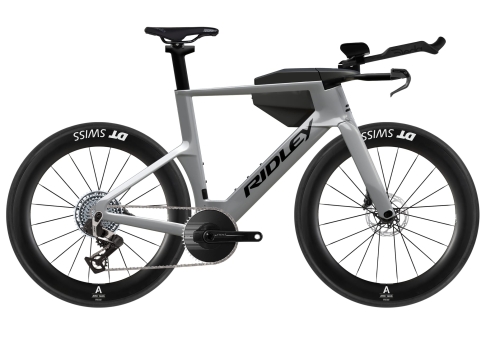 Ridley TRITON FAST Red XPLR / Battleship Grey
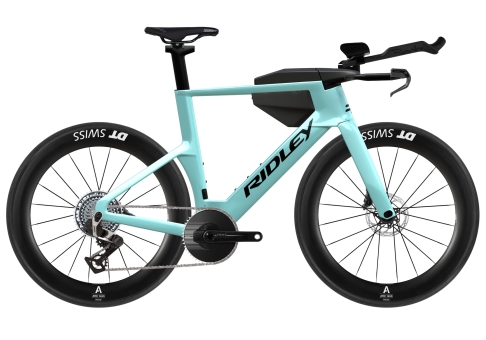 Ridley TRITON FAST Red XPLR / Soft Blue
The origins of the triathlon date back to the 1920s in France, where the first multi-sport events combining swimming, cycling, and running were held under the name "Les Trois Sports." However, the modern triathlon emerged on September 25, 1974, in San Diego, California, when Jack Johnstone and Don Shanahan organized the Mission Bay Triathlon with 46 participants covering 500 yards of swimming, 5 miles of cycling, and 6 miles of running. Four years later, John and Judy Collins launched the first Ironman in Hawaii: 15 athletes started over 3.86 km of swimming, 180 km of cycling, and 42.195 km of running, with Gordon Haller winning in 11:46:58 hours. The first triathletes still used standard road bikes without any special equipment. It was not until the 1980s that the development of dedicated triathlon bikes began.
The decisive impetus for the development of dedicated triathlon bikes came from Richard Bryne, who constructed the first aero clip-on handlebars in 1984 and founded the company Scepter with Bill Holland in 1985, which built the first bike with a steep seat tube angle of 81.5 degrees. Boone Lennon patented the Scott DH aerobar in 1987, which gained worldwide fame thanks to Greg LeMond's spectacular Tour de France victory in 1989. Dan Empfield recognized the potential of the steep seating position and launched the first successful production triathlon bike under the Quintana Roo brand in 1989. In the 1990s, Cervélo followed with the P3, the first pure aero triathlon bike made of carbon, which set new standards in aerodynamics. Modern triathlon bikes combine ultra-light carbon frames, integrated cockpits, disc brakes, electronic shifting, and wheels with disc or deep-section rims into highly efficient overall systems.
Triathlon cycling is now globally established and more diverse than ever. Since 2000, triathlon has been Olympic, and the Ironman World Championship in Hawaii attracts thousands of athletes from around the world each year. The bike distances range from 20 km in the sprint distance, 40 km in the Olympic distance, to 90 km in the middle distance and 180 km in the long distance. In the professional realm, a distinction is made between draft-legal races (Olympic distance) and non-drafting races (Ironman distance), which entail different cycling strategies and equipment requirements. Special triathlon bikes with clip-on aerobars, steep seat tube angles, and aerodynamic frame shapes are now the absolute norm in both elite sport and among ambitious amateur athletes. The trend is moving toward even more highly integrated aero concepts, where handlebars, frame, and wheels seamlessly interface with one another.


