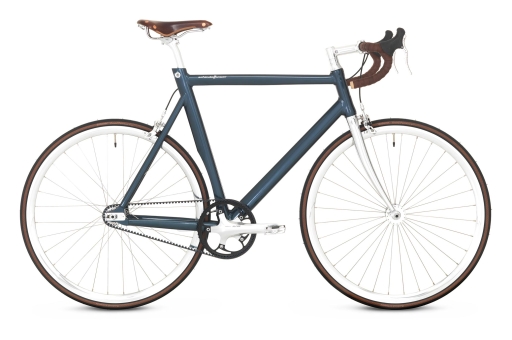
At Radfieber you will find a selection of stylish Singlespeeds by Schindelhauer for urban everyday use. These bikes do without gears and impress with their puristic design and low weight. Our singlespeeds are perfect for flat cities and are particularly low-maintenance. Stop by at Radfieber in Cologne, Düsseldorf and Berlin and discover our models. With a test ride you can experience for yourself how simple and efficient riding a singlespeed is. You can also save big with our reduced singlespeeds!
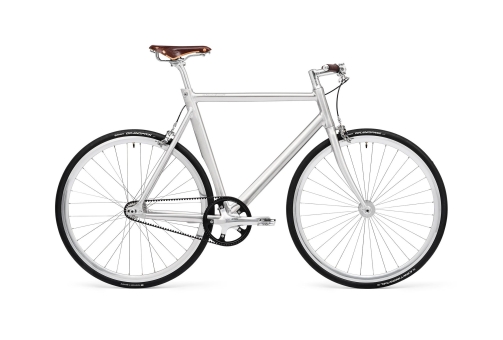 Schindelhauer SIEGFRIED / alu pur
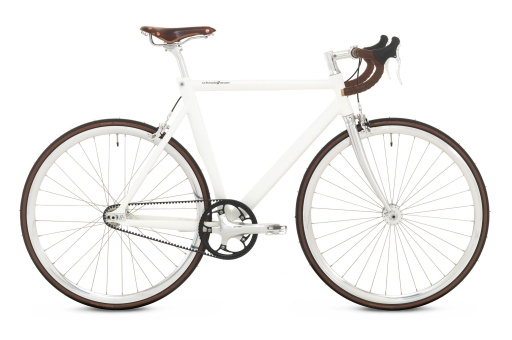
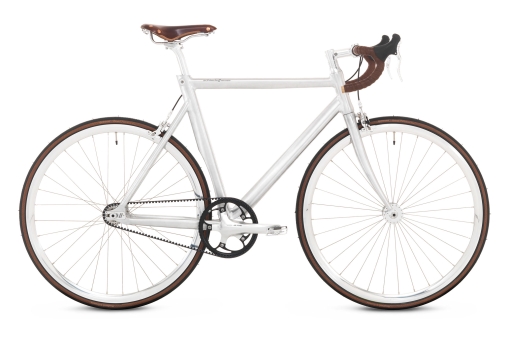 Schindelhauer SIEGFRIED ROAD
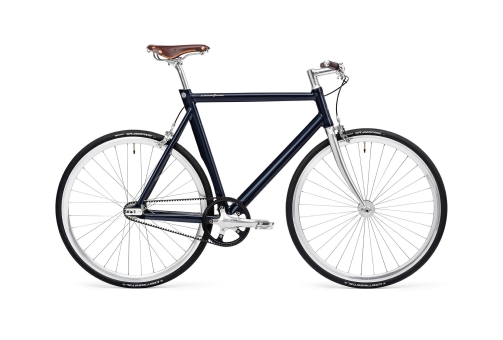
 Schindelhauer WILHELM SSP / mitternachtsblau
.jpg) Schindelhauer VIKTOR / schwarz matt
Schindelhauer VIKTOR / schwarz matt Schindelhauer VIKTOR / alu pur
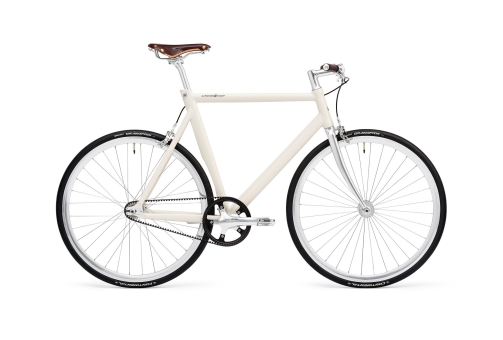
.jpg) Schindelhauer Neo Singlespeed edelweiß edelweiß
Schindelhauer Neo Singlespeed edelweiß edelweißThe history of the singlespeed begins with the first pedal-crank bicycles of the 1860s, as all early velocipedes and high-wheelers had neither gears nor a freewheel – they were inevitably singlespeeds with a fixed gear. The safety bicycles that emerged from 1885, such as John Kemp Starley's Rover, adopted this principle. Only with the invention of the freewheel (patented in 1869, widespread from around 1900) and the coaster brake (1898) could riders keep their feet still while riding. Bicycle couriers relied on fixies until World War I, before gears and freewheels conquered the mass market. In the following decades, the singlespeed survived primarily on track bikes, children's bikes, and Dutch city bikes.
The revival of the singlespeed began in the 1980s in major American cities. Bicycle messengers in New York, San Francisco, and Chicago discovered retired track bikes for themselves, which were light, low-maintenance, and cheap to acquire. The breakthrough came in 1996 at the Cycle Messenger World Championships in San Francisco, when New York messengers brought their fixies and thrilled the global courier community. In the 2000s, this developed into an urban subculture: fixies became a symbol of minimalism and individuality, embraced by hipsters, skaters, and artists. Manufacturers such as Cinelli, Bianchi, and Schindelhauer launched special singlespeed models, while flip-flop hubs with a freewheel sprocket on one side and a fixed sprocket on the other allow the choice between both variants.
Today, the singlespeed is versatilely established in sport and leisure. In urban areas, it serves as a low-maintenance everyday bike for flat cities. In track cycling, the fixie is mandatory on the velodrome. The Red Hook Crit, held in Brooklyn since 2008, has become the world's most famous fixie road race, attracting both professionals and amateurs. Singlespeed has also found a niche off-road: in singlespeed mountain biking (SSMTB), riders challenge themselves on demanding trails without gears. Alleycat races, organized by bicycle messengers, combine athletic competition with urban navigation.
The essential difference between a singlespeed and a fixie lies in the freewheel. A singlespeed has a freewheel, so the pedals can remain still while the bike rolls – this makes everyday riding easier and allows relaxed cruising. A fixie (fixed gear) has no freewheel: the pedals always turn with the rear wheel, providing direct control over the bike, but also requiring practice. The development of the fixie as a subculture began in the 1980s through bicycle messengers who appreciated the simplicity and direct riding feel. Today, flip-flop hubs offer the ability to switch between both drive types by simply turning the rear wheel around.




.jpg)