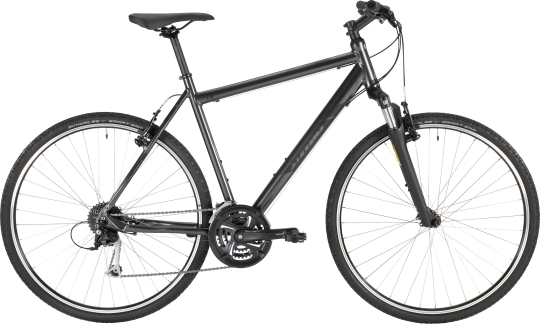
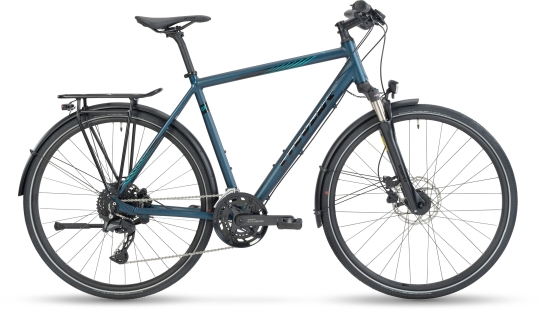
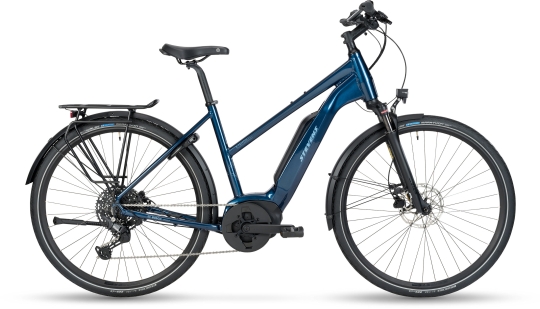
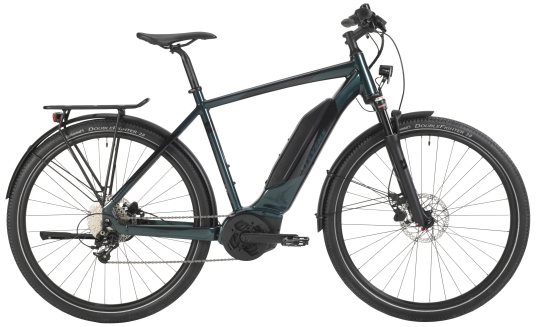
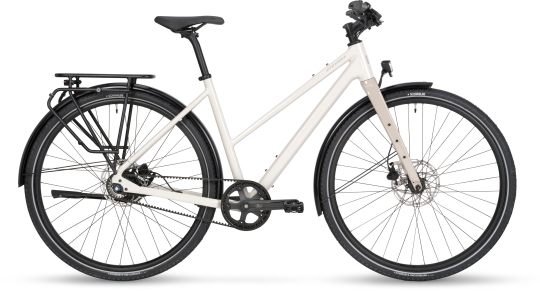
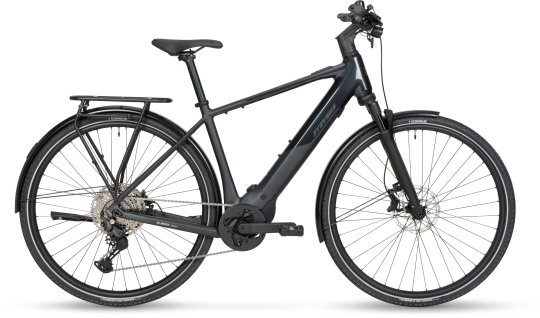
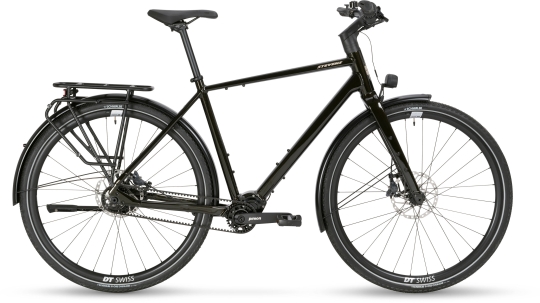
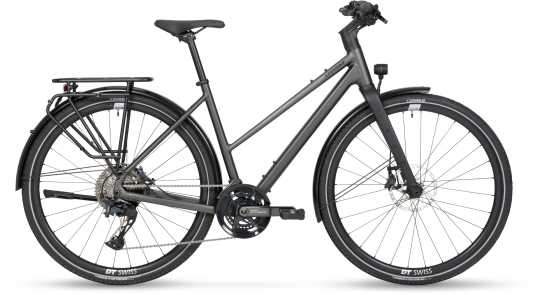
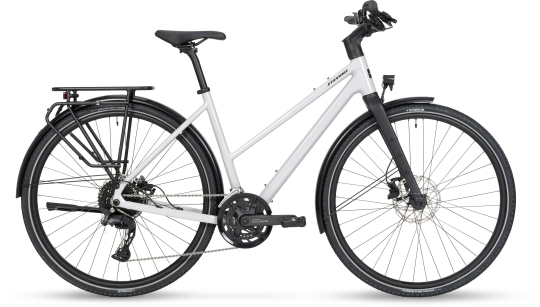
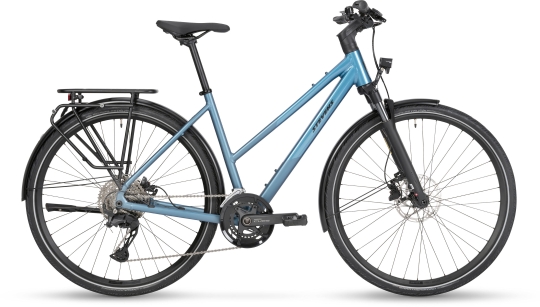
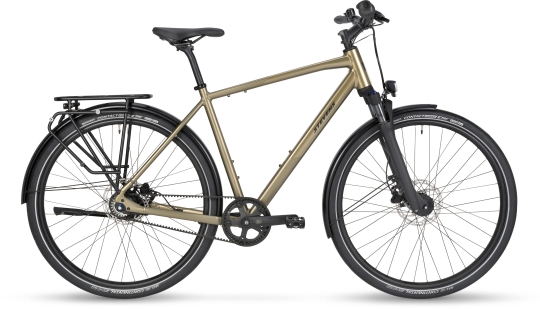
At Radfieber you will find a large selection of trekking bikes for tours, everyday use, and leisure. Our trekking bikes impress with robust equipment, comfortable geometry, and reliable components. Whether with electric assistance or without electric assistance – you are guaranteed to find what you are looking for. We also have trekking bikes available with suspension forks or with suspension seat posts. The trekking bikes at Radfieber come from the renowned brand Stevens. Online we also have constantly reduced trekking bikes. Stop by at Radfieber in Cologne, Düsseldorf or Berlin and Cologne, Düsseldorf or Berlin and get comprehensive advice. With a test ride you can experience your dream trekking bike yourself.
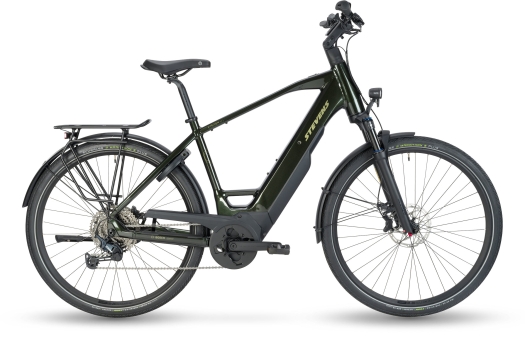 Stevens 2024 E-TRITON 7.7.1 HT / Deep Green
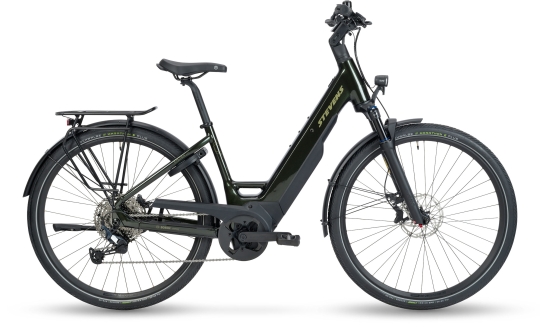 Stevens 2024 E-TRITON 7.7.1 FORMA / Deep Green
 Stevens 2024 E-TRITON 7.7.1 FORMA / Glacier Blue
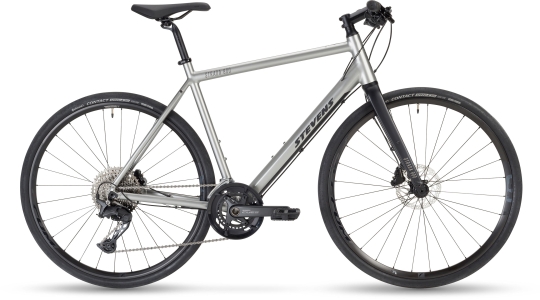 Stevens 2024 STRADA 800 Gen.2 / Frozen Silver
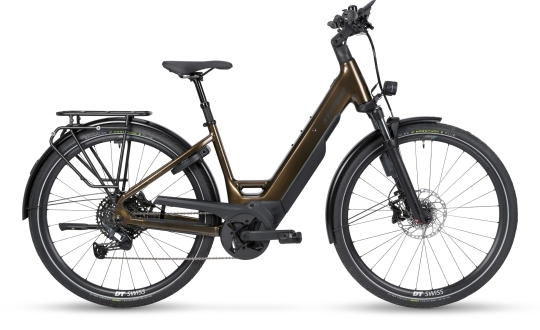 Stevens 2026 E-TRITON 8.8.1 PLUS Forma / Smoked Oak Brown
 Stevens 2026 CALETA 9.1 HT / Metal Grey
 Stevens 2026 E-TRITON 5.5.1 Forma / Khaki
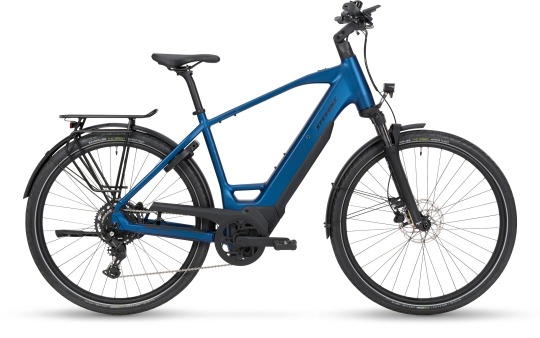 Stevens 2026 E-TRITON 5.5.1 HT / Blue Hour
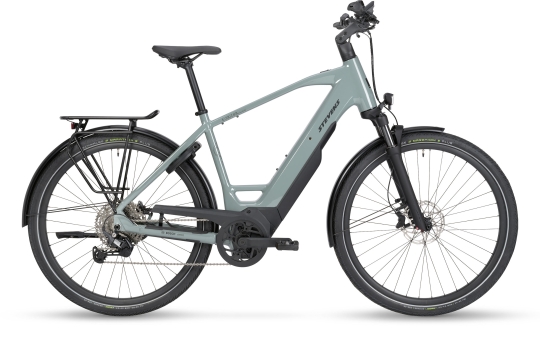 Stevens 2026 E-TRITON 7.8.1 PLUS HT / Harbor Cloud
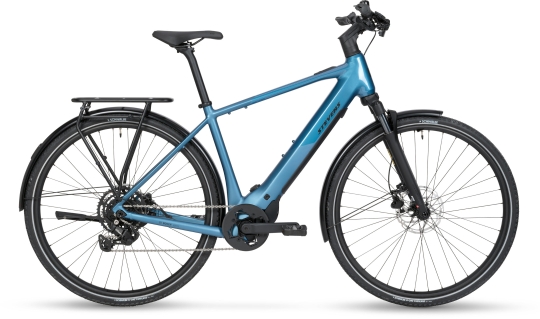 Stevens 2026 E-COMUNA 6.4.1 HT / Nordic Fade
The origins of the trekking bike lie in the bicycle tourism of the late 19th century. As early as 1878, the Bicycle Touring Club, the first bicycle travel club in the world, was founded in Great Britain, and brave riders circled the globe on high-wheelers and later on safety bicycles. However, the term "trekking bike" as an independent bicycle category only emerged in the 1980s, when manufacturers began combining elements of mountain bikes with those of classic touring bikes. In Germany, the trekking bike developed into a versatile all-rounder for bicycle tours, everyday commuting, and leisure trips. Pioneers such as Stevens, Koga, and Trek brought the first models to market, combining a flat handlebar, suspension fork, and wide gearing with a sturdy rack and mudguards.
The technical development of trekking bikes progressed rapidly in the following decades. In the 1990s, aluminum frames became the standard, significantly lighter than the previous steel frames. In the early 2000s, hydraulic disc brakes were introduced, offering reliable braking performance even in wet conditions. Drivetrains evolved from 21 to 27 and later 30 gears, while modern trekking bikes increasingly rely on low-maintenance 1x drivetrains with a large cassette. Hub dynamos with LED headlights provide reliable light at all times. Today's trekking bikes combine lightweight carbon or aluminum frames with comfortable geometry, suspension seat posts, and well-thought-out equipment for year-round use.
Trekking bikes can be adapted in many ways to individual needs. A sturdy rack at the front and rear allows the transport of panniers for multi-day tours. Mudguards keep spray water and dirt away from the rider and luggage. A hub dynamo reliably powers the headlight and tail light, while a standlight function ensures visibility even after stopping. Handlebar extensions (bar ends) or a drop bar attachment allow an ergonomically optimal hand position on long rides. A bike computer or GPS navigation device helps with route planning, and a sturdy lock provides theft protection during breaks. Many trekking bikes can also be retrofitted with a kickstand, a bell, and a rearview mirror.
The development of e-trekking bikes began in the early 2010s, when powerful mid-drive motors from Bosch, Shimano, and Brose came onto the market. These motors were specifically optimized for use in trekking bikes: they offer smooth, natural assistance that reliably helps even with a fully loaded bike and on inclines. The main reason for the growing popularity of e-trekking bikes is that they enable longer tours and higher luggage loads without requiring riders to be exceptionally fit. Older people appreciate the assistance to remain active in retirement, while commuters use the e-trekking bike for their work commute and can transport luggage at the same time. Modern e-trekking bikes achieve ranges of 80 to 150 kilometers and weigh between 22 and 28 kilograms depending on battery size. The batteries are now usually integrated into the frame and can be removed for charging. Today, the e-trekking bike is the best-selling e-bike category in Germany.