At Radfieber you will find a large selection of urban bikes and e-bikes. Whether minimalist bikes for the city or electrically assisted urban e-bikes for your daily commute – you are guaranteed to find what you are looking for. Our urban bikes and e-bikes come from renowned brands such as Schindelhauer, Desiknio, Stevens and Marin. Urban bikes, like city bikes, are designed for urban traffic. However, unlike city bikes, urban bikes prioritize aesthetics and reduced weight. This is achieved through less technology and comfort and a slimmer design. This makes urban bikes lower-maintenance than city bikes, especially when a belt drive is used. At the same time, aesthetics play a greater role: the color of the frames and tires as well as the materials used for handlebar grips and saddle covers are particularly refined. Stop by at Radfieber in Cologne, Düsseldorf or Berlin and let our experts advise you. With a test ride you can experience and try out your dream urban bike for yourself. Online you can get many reduced urban bikestoo!
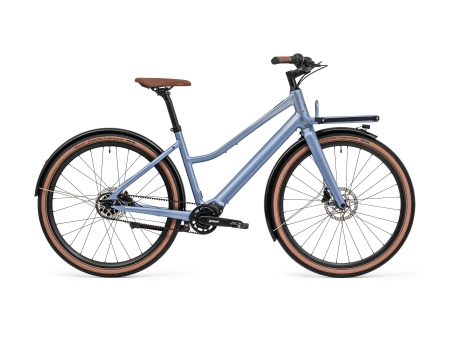 Schindelhauer EMILIA VI X20 / lavendelblau
 Schindelhauer EMILIA VI X20 / mitternachtsgrün
 Schindelhauer EMIL IX X20 / mitternachtsgrün
.jpg) Schindelhauer EMILIA IX X20 / lavendelblau
Schindelhauer EMILIA IX X20 / lavendelblau.jpg) Schindelhauer EMIL VI X20 / mitternachtsgrün
Schindelhauer EMIL VI X20 / mitternachtsgrün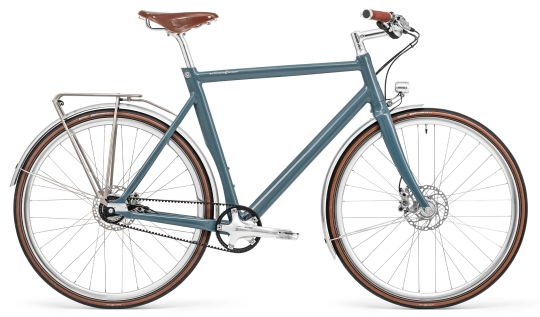 Schindelhauer FRIEDRICH XI Limited Edition / petrol
.jpg) Schindelhauer EMILIA IX X20 / mitternachtsgrün
Schindelhauer EMILIA IX X20 / mitternachtsgrün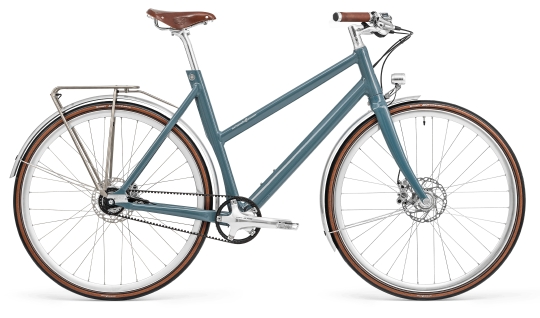 Schindelhauer FRIEDA XI Limited Edition / petrol
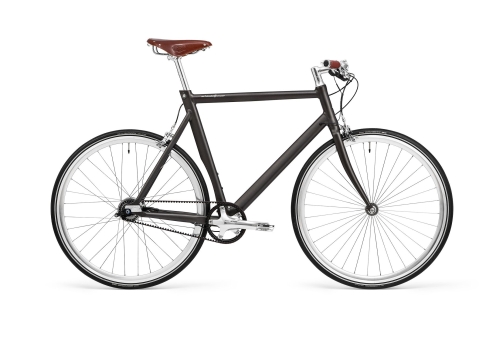 Schindelhauer LUDWIG XI / graphitschwarz
 Schindelhauer ARTHUR Cruiser X35 / graphitschwarz
 Schindelhauer ARTHUR X20 SSP / granatrot
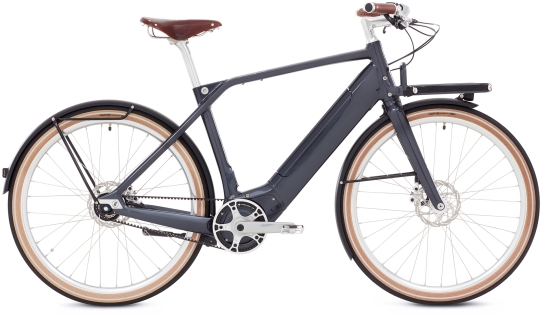 Schindelhauer HEINRICH
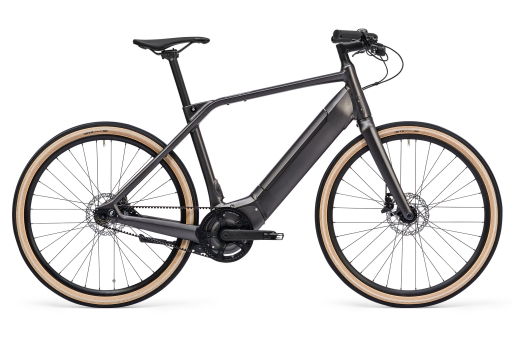 Schindelhauer HEINRICH SSP Performance Line / graphitschwarz
 Schindelhauer LOTTE / rubinrot
 Schindelhauer LOTTE / alu pur
 Schindelhauer FRIEDA VIII
.jpg) Schindelhauer LUDWIG XI / alu pur
Schindelhauer LUDWIG XI / alu pur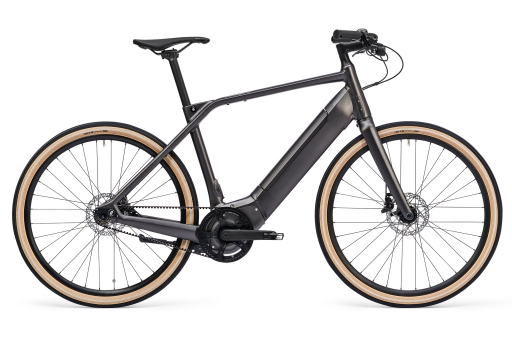 Schindelhauer HEINRICH SSP Active Line Plus / graphitschwarz
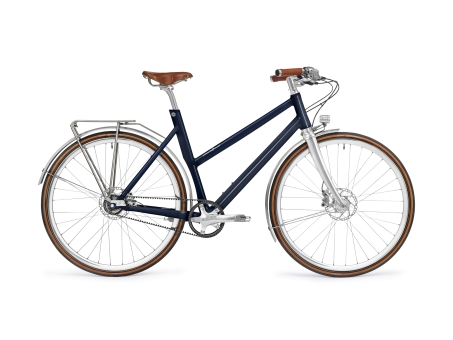 Schindelhauer FRIEDA VIII / mitternachtsblau
The development of urban bicycles began in 1817 when Karl von Drais invented the running machine in Mannheim – the first two-wheeler used as a means of transport in cities. In the 1860s, the velocipede with pedal drive followed, which was notorious as the "boneshaker" due to its rigid iron tires and lack of a drivetrain. The decisive breakthrough for urban cycling came in 1885 when the Englishman John Kemp Starley introduced the Rover Safety Bicycle, whose diamond frame, chain drive and equal-sized wheels established the basic form of the modern bicycle. In the 1890s, the bicycle experienced its first worldwide boom: industrial mass production made it affordable for workers for the first time, and it developed into a practical everyday means of transport in cities. After a decline in the post-war period when cars dominated the cities, urban cycling experienced a renaissance from the 1980s onward – led by bike messengers in New York who rediscovered retired track racing bikes (fixies) and made minimalist urban cycling popular. In the 2000s, this developed into a worldwide urban subculture that elevated the bicycle from a mere means of transport to a lifestyle object.
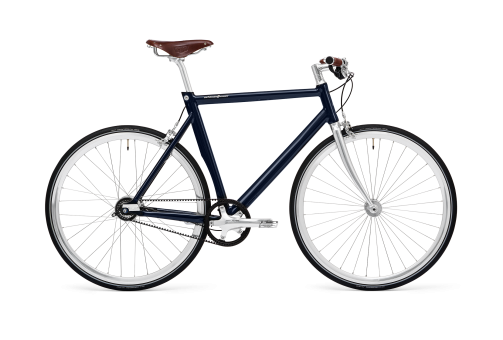
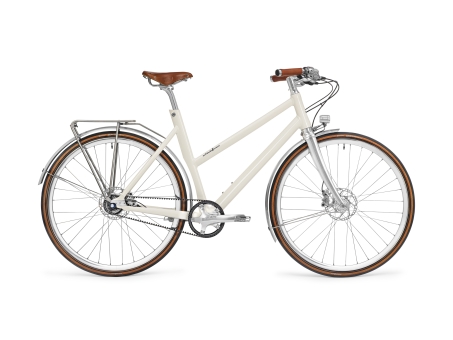
Features: Urban bicycles are characterized by a minimalist, sporty-chic design specifically tailored for daily commuting in the city. They deliberately do without bulky accessories such as large racks or conspicuous lighting systems and instead focus on a clean look and low maintenance. Many models are equipped with a clean and quiet belt drive instead of a classic chain as well as a protected hub gear. Their low weight makes them particularly flexible – they can easily be carried into an apartment or basement and are nimble and agile in city traffic.
Distinction from other bicycle types: In contrast to classic city bikes, which are heavier and offer full equipment with a basket, rack and hub dynamo for convenient cargo transport, urban bikes are designed to be sportier and more agile. They differ from trekking bikes in their focus on the city: trekking bikes are designed for long tours with lots of luggage and are accordingly more robust and heavier. Urban bikes borrow the slim, elegant frame look from road bikes, but are geared more comfortably for stop-and-go city traffic and designed for everyday practicality.
The development of urban e-bikes began in the early 2000s when the first pedelecs with hub motors came onto the market. The breakthrough came around 2010 with powerful mid-drive motors from Bosch, Shimano and Brose, which were specially optimized for city traffic. These motors support the rider smoothly and naturally, making it easier to ride in hilly cities like San Francisco or Stuttgart and making longer commutes of ten to twenty kilometers comfortably manageable. Lithium-ion batteries became increasingly lighter, more compact and more powerful, so ranges of 50 to 150 kilometers are now standard. The target group is broad: commuters use e-city bikes for their daily work commute, parents appreciate e-cargo bikes for transporting children, and older people gain new mobility in the city through electric assistance. Delivery services are increasingly relying on e-cargo bikes for the last mile. Today, e-bikes are an integral part of the urban landscape and have significantly increased the share of cyclists in many metropolises such as Copenhagen, Amsterdam or Berlin.



.png)