At Radfieber you will find cargo bikes from muli Cycles for transporting children, groceries, or bulky luggage. Our cargo bikes are available with electric assistance, which makes riding effortless even with heavy loads. Stop by at Radfieber in Cologne, Düsseldorf or Berlin and get advice on the various models. With a test ride you can experience for yourself how practical a cargo bike is in everyday life.
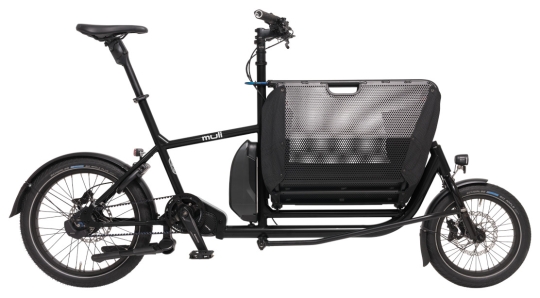 muli MOTOR ST PRO Shimano Steps EP6-Cargo
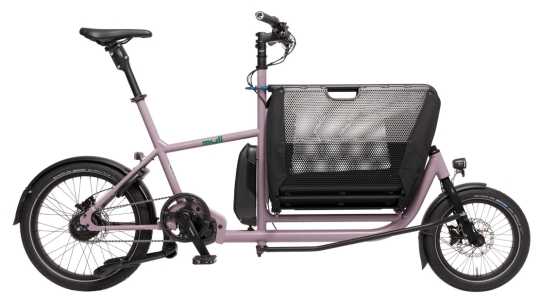 muli MOTOR ST Shimano Steps EP5
The history of cargo bikes began in 1877, when British inventor James Starley designed the first carrier tricycles for transporting goods and people. As early as 1881, the first carrier tricycle was sold to the British Post Office, which subsequently used it for parcel deliveries. In the 1890s, companies around the world increasingly employed bicycle couriers – for example in 1894 in San Francisco, when a railway strike paralyzed mail delivery and bicycle manufacturers bridged the affected route with pedal-powered messengers. The decisive breakthrough came in 1923 in Denmark: the company Smith & Co. (SCO) in Odense built the first Long John cargo bike with a low-loading platform between the rider and the front wheel, which was presented to the public at the Wembley World Fair in 1924. In the following decades, cargo bikes spread across Europe as indispensable work tools for postal services, trades, and commerce.
Modern cargo bikes have moved far beyond their historical predecessors in terms of technology and design. They are made of lightweight materials such as aluminum or carbon and are available in various configurations: as a two-wheeled Long John with linkage steering, as a three-wheeled trike with a stable standing surface, or as a compact cargo bike with two small wheels at the front. Manufacturers such as muli Cycles offer specialized models for different applications. High-quality components such as disc brakes, hub gears, and suspended frames ensure safety and comfort even when fully loaded.
Today, cargo bikes are used in a wide variety of areas. Privately, they serve primarily for transporting children to daycare or school, as well as for shopping for groceries and bulky goods. Professionally, they are indispensable as delivery vehicles for parcel services, courier services, tradespeople, and the gastronomy sector. In leisure time, cargo bikes are enjoying growing popularity for family outings or picnic trips. This enormous versatility has led to a veritable boom in cargo bikes since the 2010s – supported by municipal funding programs, growing environmental awareness, and the increasing transport transition in German cities.
The development of cargo bikes with electric motors began in the early 2010s, when powerful mid-drive motors from Bosch, Shimano and others were first installed in transport bikes. These motors make it possible to effortlessly move heavy loads of 100 to 250 kilograms and tackle inclines. Battery technology developed in parallel from early 300 Wh batteries with limited range to modern 500 to 1000 Wh batteries that allow distances of 50 to 150 kilometers. Today, e-cargo bikes are the fastest-growing segment of the cargo bike industry and have transformed the transport bike from a niche product into an everyday vehicle for broad sections of the population.


