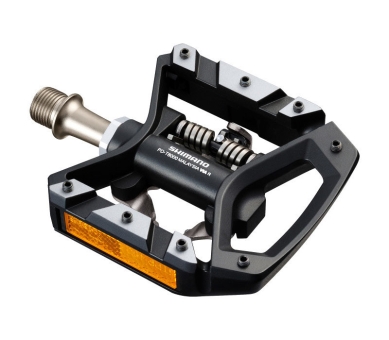
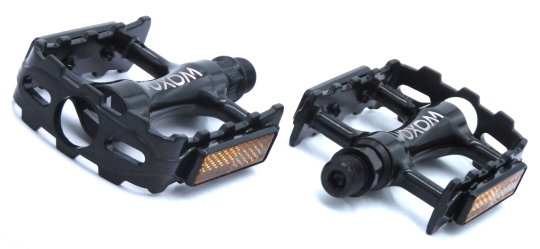
Bicycle pedals at Radfieber – clipless pedals and platform pedals from Shimano, Voxom and Contec. Radfieber carries pedals for every area of use. Road pedals for beginners and pros, trekking pedals that are also suitable for city bikes, SPD click system, flexibly adjustable entry and release tension, adjustable spring tension: that is what pedals from Shimano, Voxom and Contec offer you.
.jpeg) Shimano Pedale PD-R550L SPD-SL
Shimano Pedale PD-R550L SPD-SL .jpeg) Shimano Pedale PD-R7000 105 Carbon
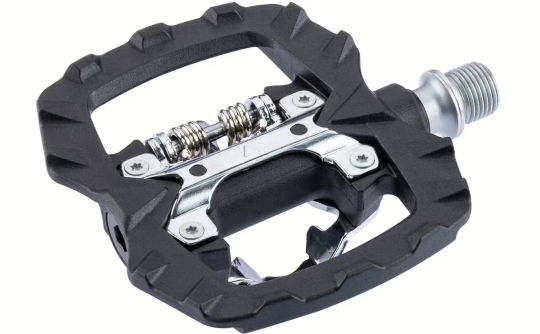
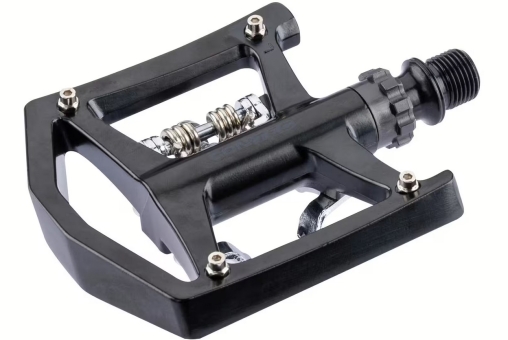
Shimano Pedale PD-R7000 105 Carbon What types of bicycle pedals are there? Platform pedals and clipless pedals; some pedals are also combination pedals: one side clipless, the other side platform. Which pedal suits which bike or which rider and what else is there to consider?
Platform pedals: also called flat pedals or bear paws
Who are they suitable for? Ideal for everyday use, city and e-bike. Lots of standing area – perfect for normal footwear.
What should you look out for? Grip & standing area. Since the shoe is not firmly connected to the pedal, pay attention to a non-slip surface. Tip: Sometimes a combination pedal is also a good idea for city bikes: especially in wet weather when the shoe tends to slip.
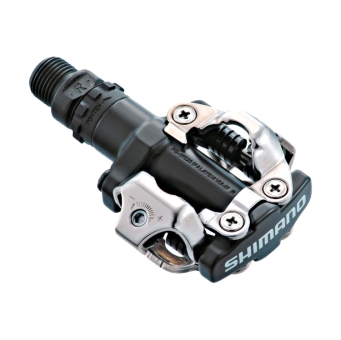
Clipless pedals: also called SPD pedals (for MTB / trekking with Shimano SPD system) or SPD-SL / Look pedals (for road bikes)
What are they suitable for? For road, gravel, trekking and sporty MTB. The foot is firmly connected to the pedal, which significantly improves power transfer and control.
What should you look out for? Release tension & shoe compatibility. More on adjusting bicycle pedals further right.
Entry tension: If little force is needed to press the shoe into the pedal, this is good for beginners.
Release tension or release hardness: In everyday use, quick unclipping is often more practical and safer. If more force is needed to release the shoe from the pedal, this is suitable for more experienced, sporty riders who need firm hold and do not want to unclip unintentionally.
Entry and release tension can often be adjusted via a screw on the pedal – the spring tension.
Bicycle pedals are made from various materials that differ in weight, durability, price and intended use. Plastic (nylon, glass-fiber reinforced plastic) is the most commonly used material for platform pedals and entry-level clipless pedals. Advantages: low weight, low price, corrosion-resistant and sufficiently stable for everyday use, city and occasional tours. Disadvantages: under extreme load (downhill, heavy e-bike) plastic can break or deform, and durability is lower than with metal. Area of use: city bikes, entry-level MTBs, trekking bikes and children's bikes – examples are the Contec GRIND MTB/URBAN (€19.95) and the Voxom PE21 TOURING (€17.95).
Aluminium is the standard material for high-quality pedals. Advantages: very good mix of low weight and high stability, corrosion-resistant through anodizing (black, silver, colored) and durable. Disadvantages: more expensive than plastic, can get scratched when hitting rocks. Area of use: trekking, MTB and road pedals in the mid to high price range. Aluminium pedals with a steel axle are the most common type for SPD and platform pedals. Carbon is used in road and high-end MTB areas. Advantages: extremely light, very stiff for optimal power transfer, vibration-dampening. Disadvantages: very expensive, can break brittlely under impact, prone to scratches. Area of use: road clipless pedals such as the Shimano PD-R7000 105 Carbon as well as lightweight XC-MTB pedals. Steel (chromoly, CroMo) is primarily used for the pedal axle and, in cheaper pedals, also for the body. Advantages: extremely robust and durable, inexpensive to manufacture. Disadvantages: heavy, rusts without coating, prone to corrosion in wet conditions and road salt. Area of use: inexpensive platform pedals and heavy-duty applications where robustness outweighs weight. Titanium is only found in absolute high-end pedals (axle) – maximum weight reduction, but extremely expensive and rare.
When choosing pedals, the axle also plays a role: steel axles are standard, chromoly steel is stronger and lighter, titanium axles save maximum grams, stainless steel axles are rust-free. The combination of aluminium body and CroMo axle (as with most Shimano SPD pedals) is the proven standard for most areas of use – durable, lightweight and fairly priced.



.jpg)
.jpeg)