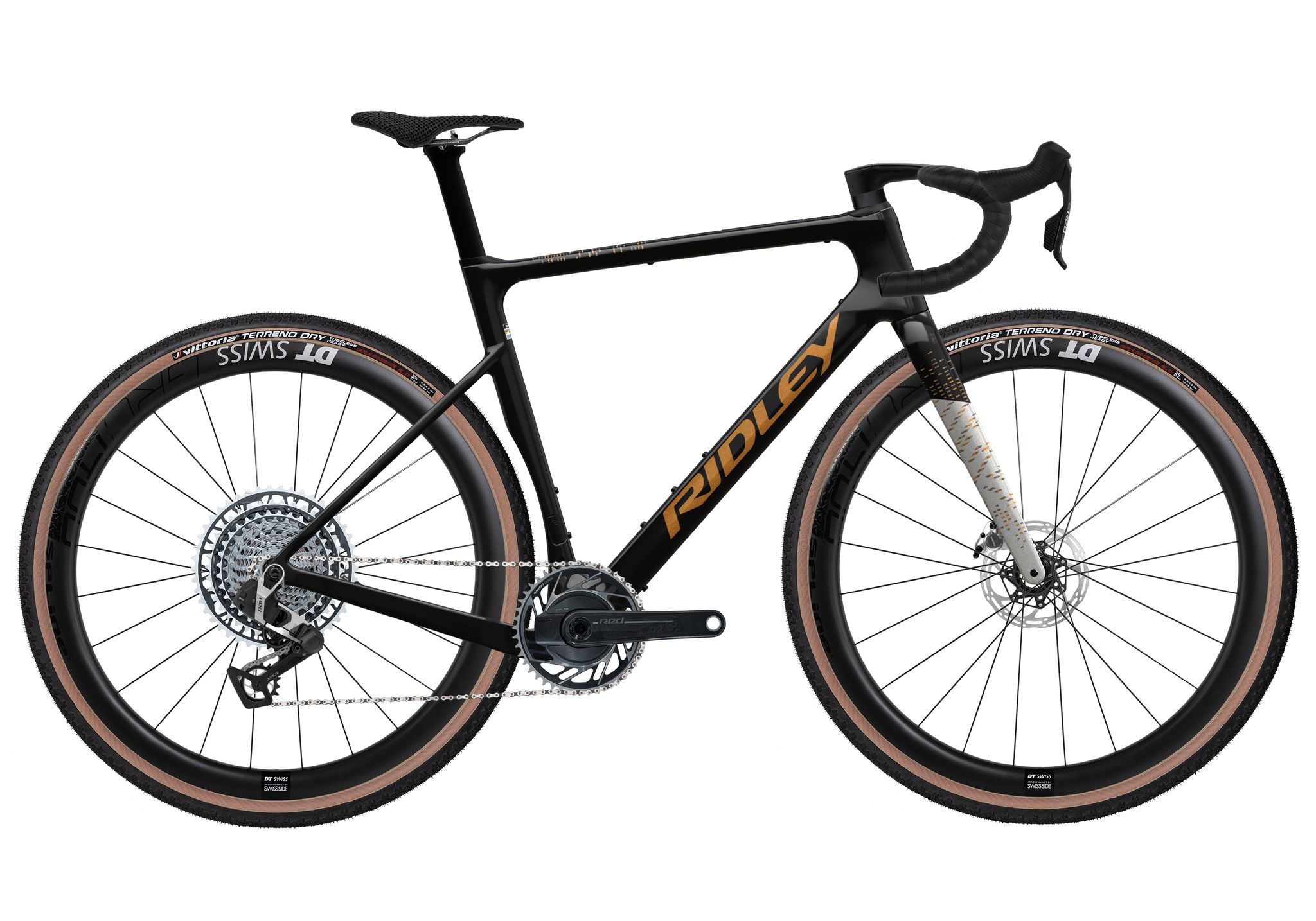
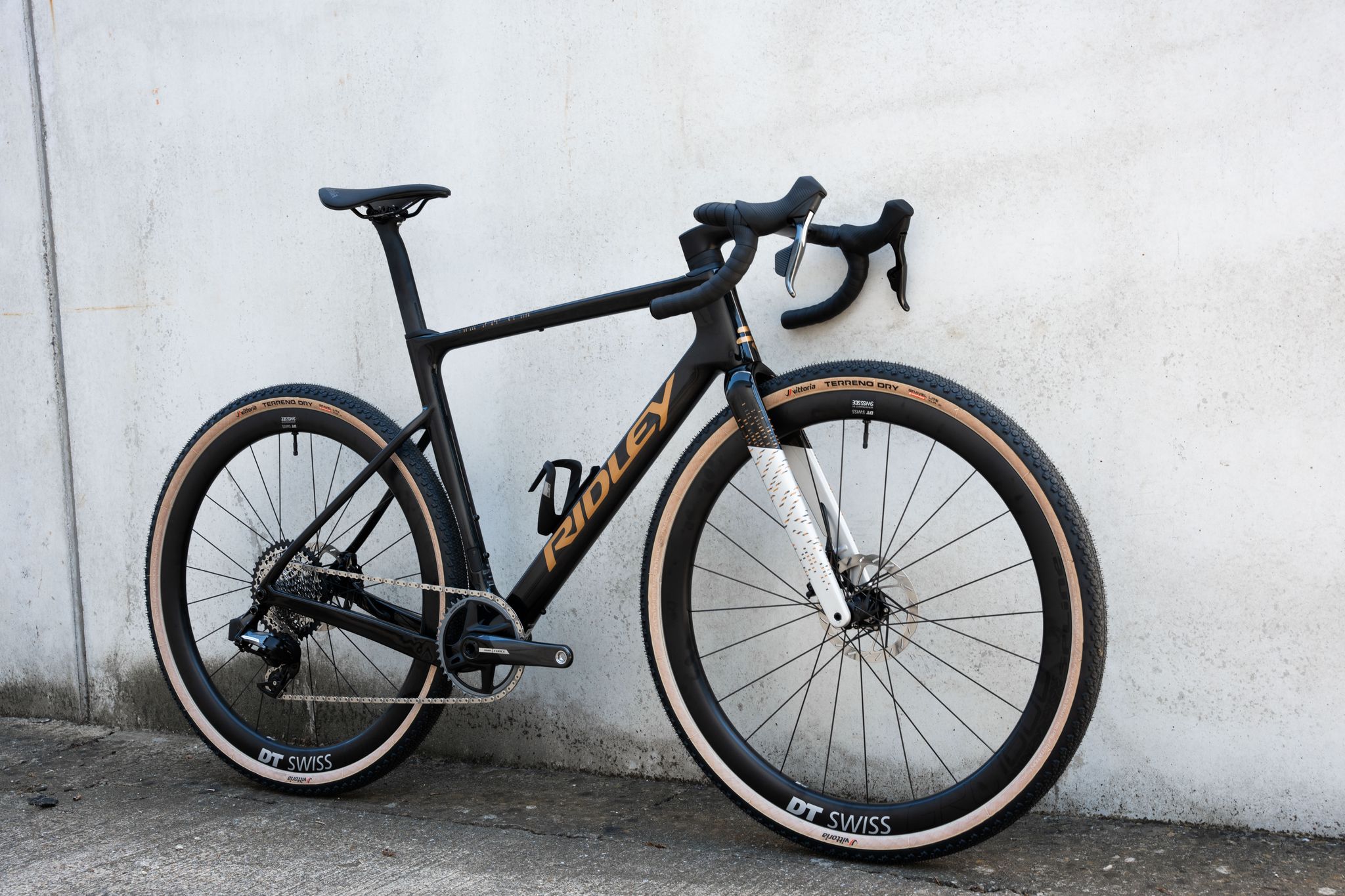
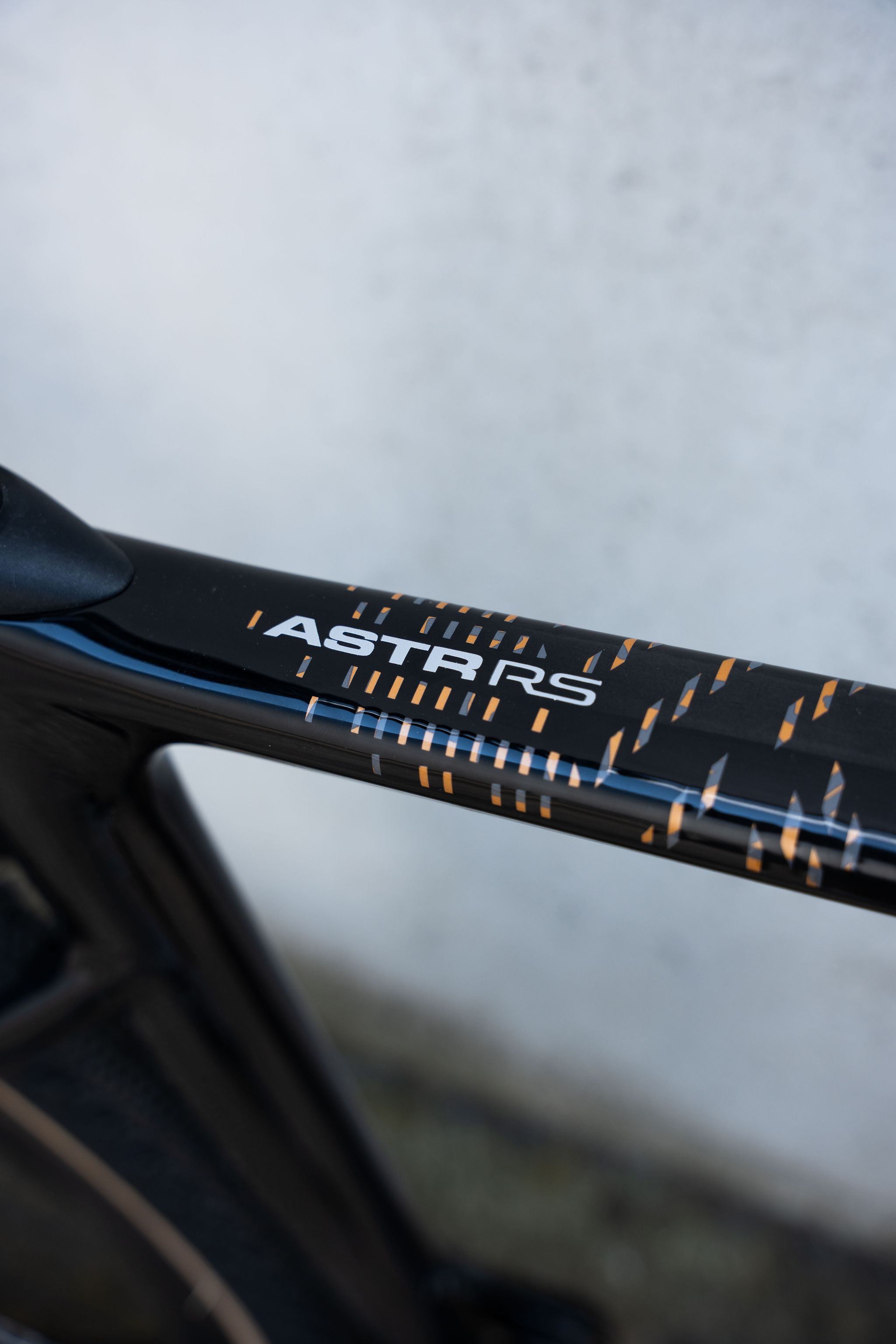
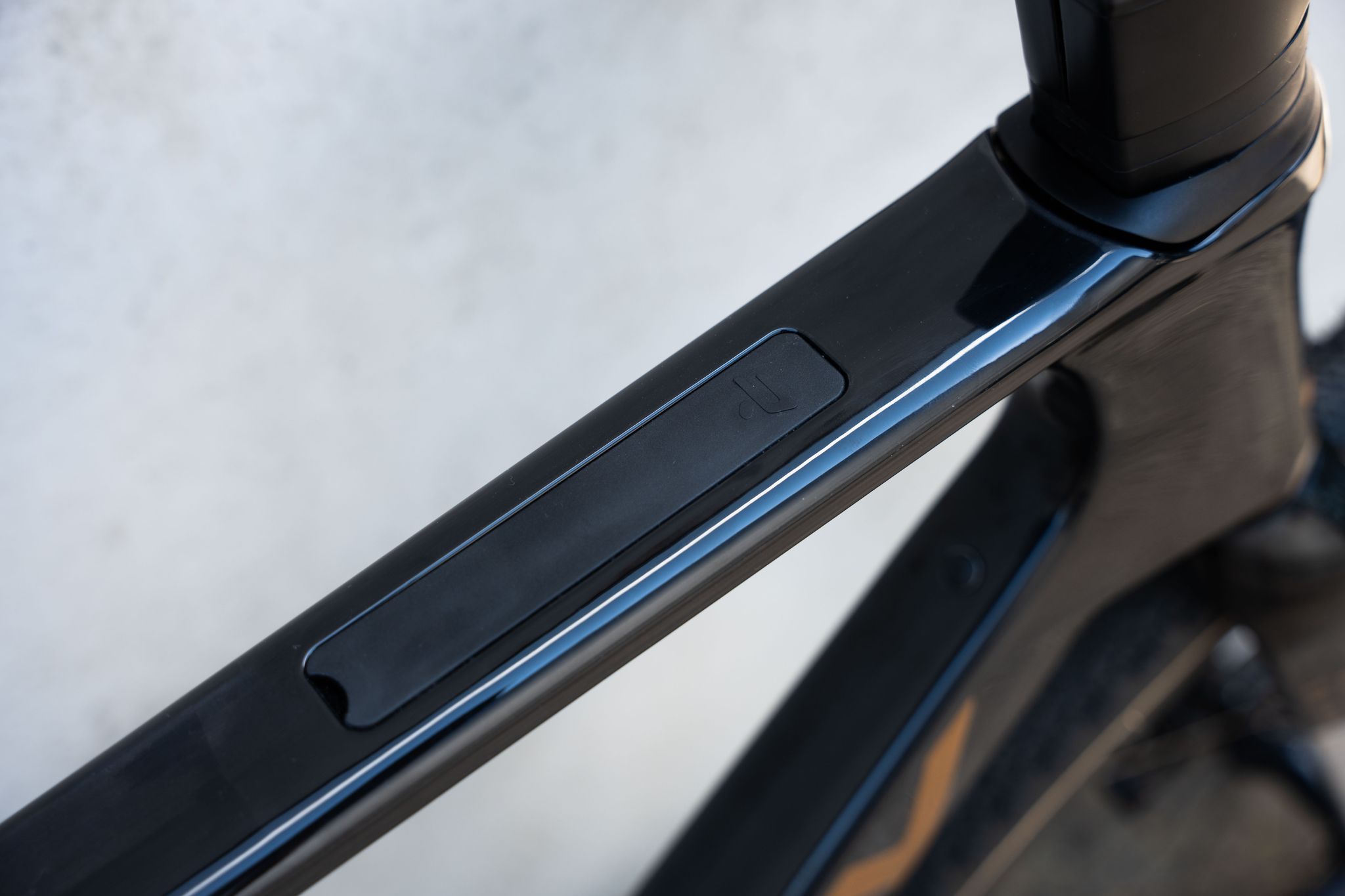
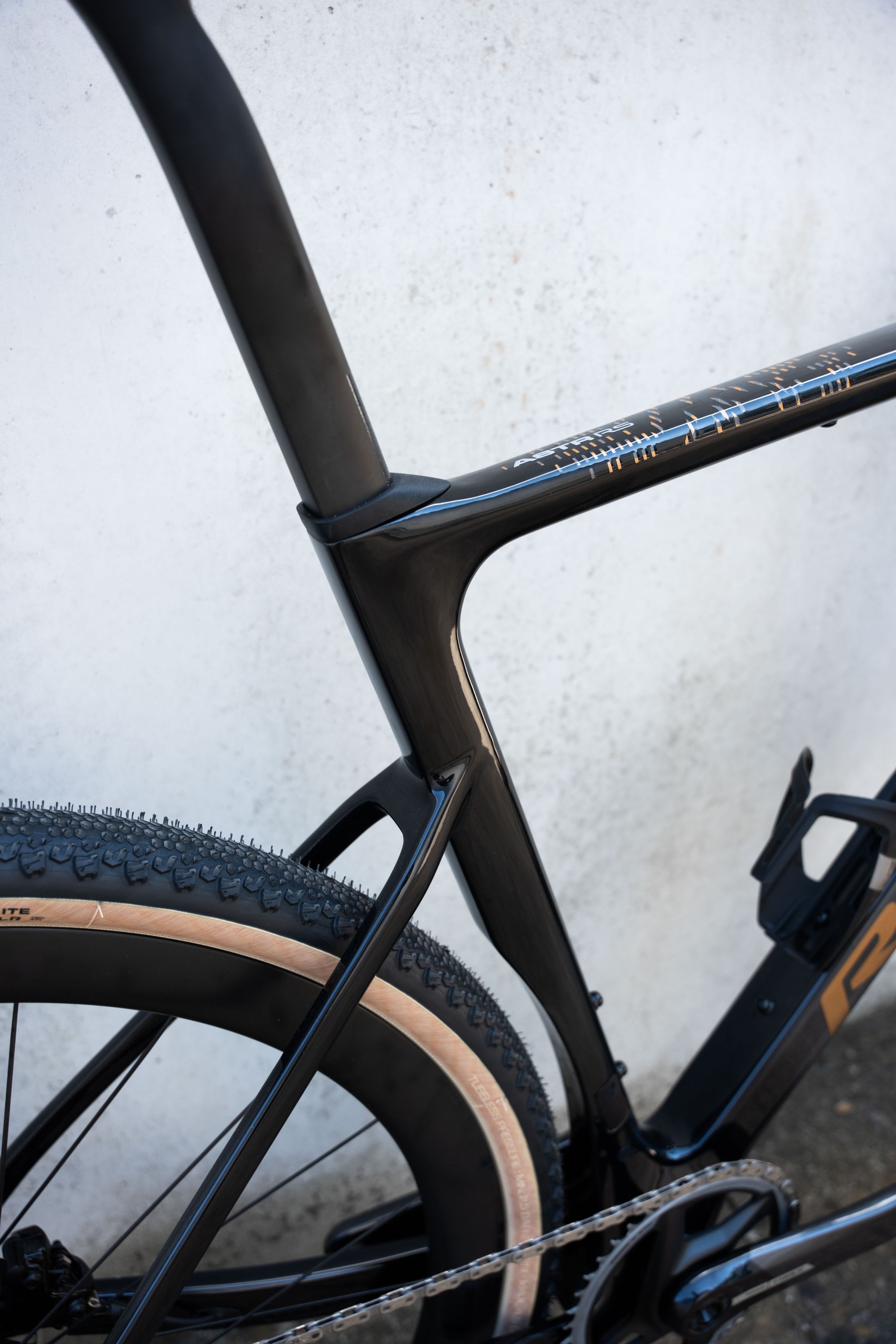
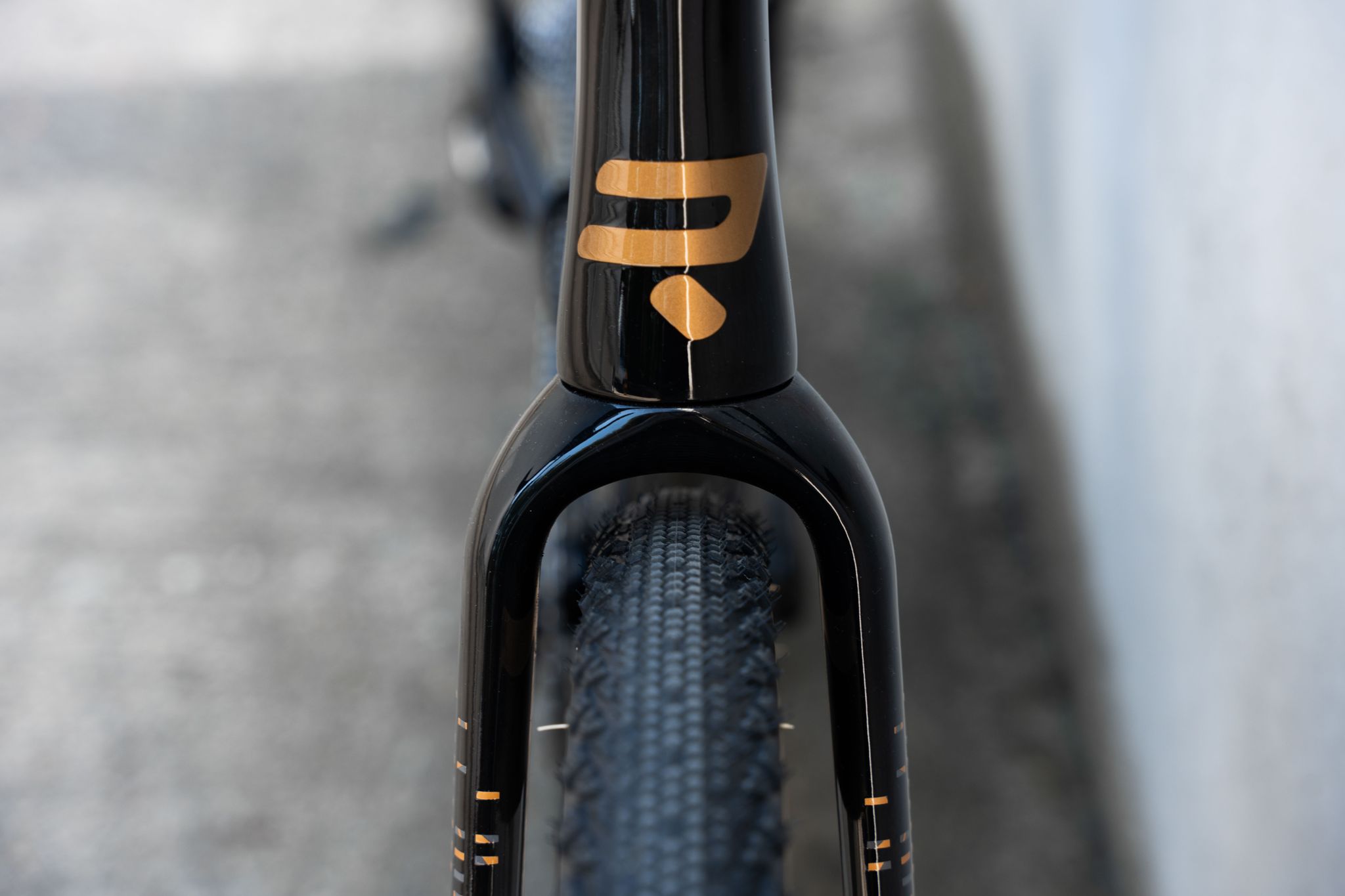

The ASTR RS combines aerodynamic efficiency with a low system weight in an exceptionally powerful package. This premium build lifts the concept to its highest level: SRAM Red XPLR, wide Schwalbe tyres and 50 mm deep carbon wheels make the race gravel bike ready for demanding competition.
A video from an external video provider is displayed here. YouTube has its own cookies and may collect data on activities. Consent is required to view YouTube videos.
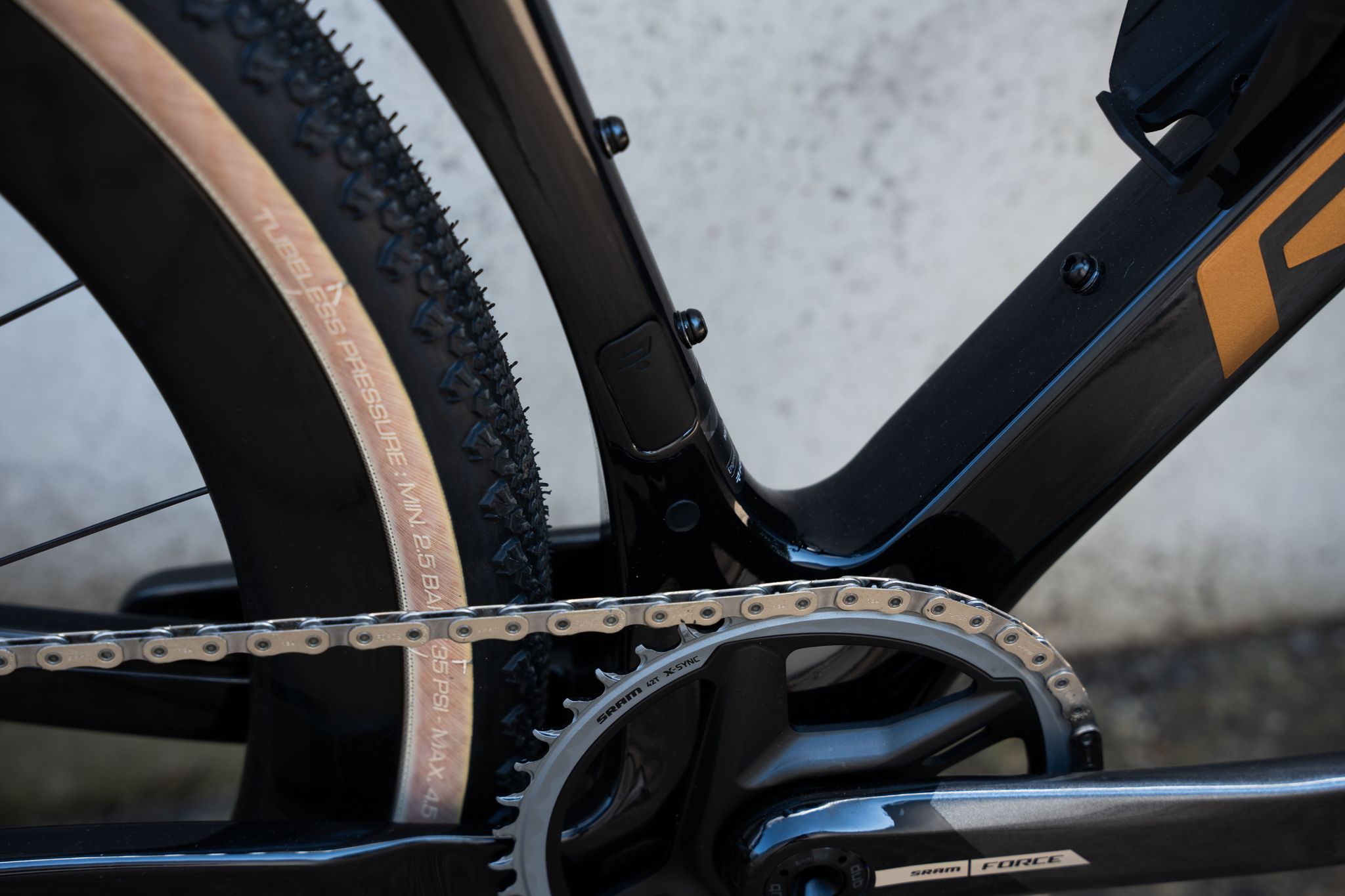
Enable Youtube videosThe ASTR RS frameset is made of elite-series ultra-high-modulus carbon and, at roughly 890 grams (size M), numbers among the lightest platforms of its class. Aerodynamically profiled tube shapes and the diffuser integrated into the fork crown, born from the FALCN RS aero-to-weight research, measurably reduce drag. The drivetrain is the absolute top package of the SRAM family: the Red XPLR as a fully wireless 1x13 groupset with a 42-tooth chainring and a 10–46 cassette – 13 gears covering everything from steep climbs to flat sprints. A power meter is integrated into the crankset and relays watt data directly without extra gadgets. A highlight of this build is the wide 50 mm Schwalbe G-One Evo tyre, offering generous grip and comfort on rough terrain, while the 50 mm deep DT Swiss GRC 1400 Dicut wheels keep rolling resistance low. Lighting is deliberately not provided on this race bike, and rack eyelets are absent as well – for the road there remain aero frame and saddle bags with Apidura mounts. The racer is completed by the integrated Forza Nimbus Pro cockpit in Stealth Black, the Forza aero seatpost and the Selle Italia Novus Boost Superflow saddle with carbon rails. The XL frame size addresses tall riders.
ASTR is the series' own collective term for the platform, pronounced "ASTor" and echoing the Latin word for star; the maker never published an official long form. RS officially stands for "Racing Sport" and marks the most powerful model. RED names the highest and lightest groupset tier of the component maker, XPLR its gravel-specific subfamily called "Explore". 1x13 describes the arrangement of one chainring and thirteen sprockets. UD carbon points to the visible unidirectional fibre direction, Silver to the silvery paint variant; XL, finally, is the largest available frame size.
The three lines of the ASTR family share the base geometry but differ in material, cockpit, seatpost and drivetrain choice: the ASTR runs HM carbon, a round post and groupsets that can be fitted mechanically or electronically, the E-ASTR integrates an electric motor, and the ASTR RS rides elite carbon with an aero seatpost, an integrated Nimbus Pro cockpit and electronic shifting only. Within the RS lineup this build heads the ranks: while the Force variant gets by with the second-highest groupset class and 47 mm tyres, the top model reaches for the Red XPLR with 50 mm Schwalbe rubber, deeper GRC 1400 wheels and a carbon-railed saddle. The silvery look over visible UD laminate rounds off the premium character.
The intended use is clearly gravel racing: the ASTR RS is engineered to save energy and stay stable in demanding events through optimised aero, low weight and generous tyre reserve. Unlike the tour-oriented Kanzo Adventure with racks and lighting solutions and the everyday-capable Grifn RS, it is a pure performance instrument; against the older Kanzo Fast it scores with newer aero insights and more tyre clearance. With the Red equipment it speaks especially to riders seeking maximum lightness, precise shifting and dependable wheels on long competitive stages with plenty of climbing – a bike for those who want to ride up front in the field.
 Ridley ASTR GRX800 DI2 2x / Black Metallic/Bronze Gold
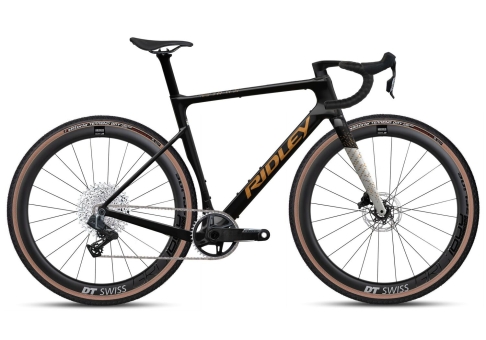 Ridley ASTR RS Force XPLR 1x13 / UD Carbon/Silver
 Stevens 2026 AVIOLO 9.1 HT / Black Mercury