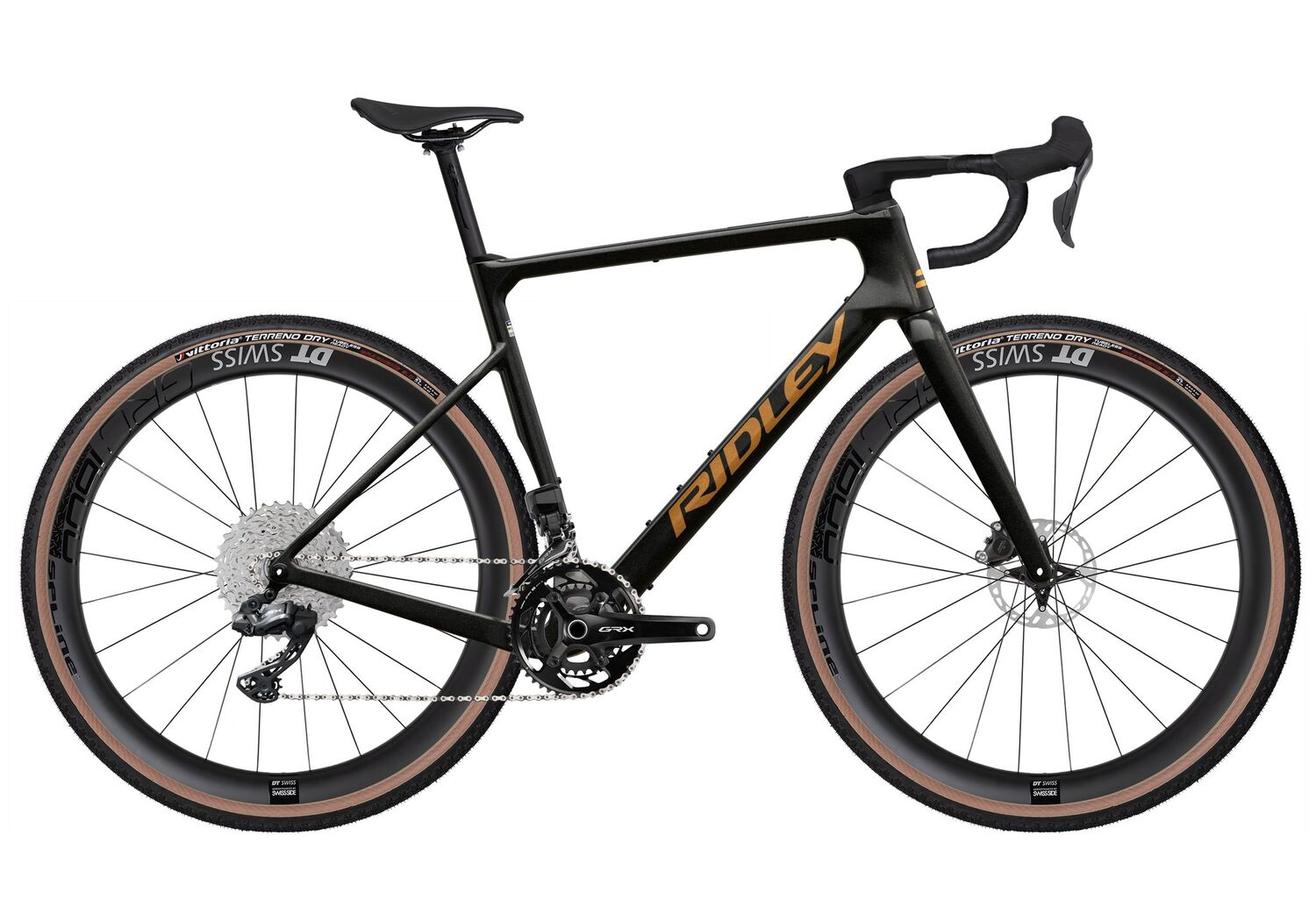
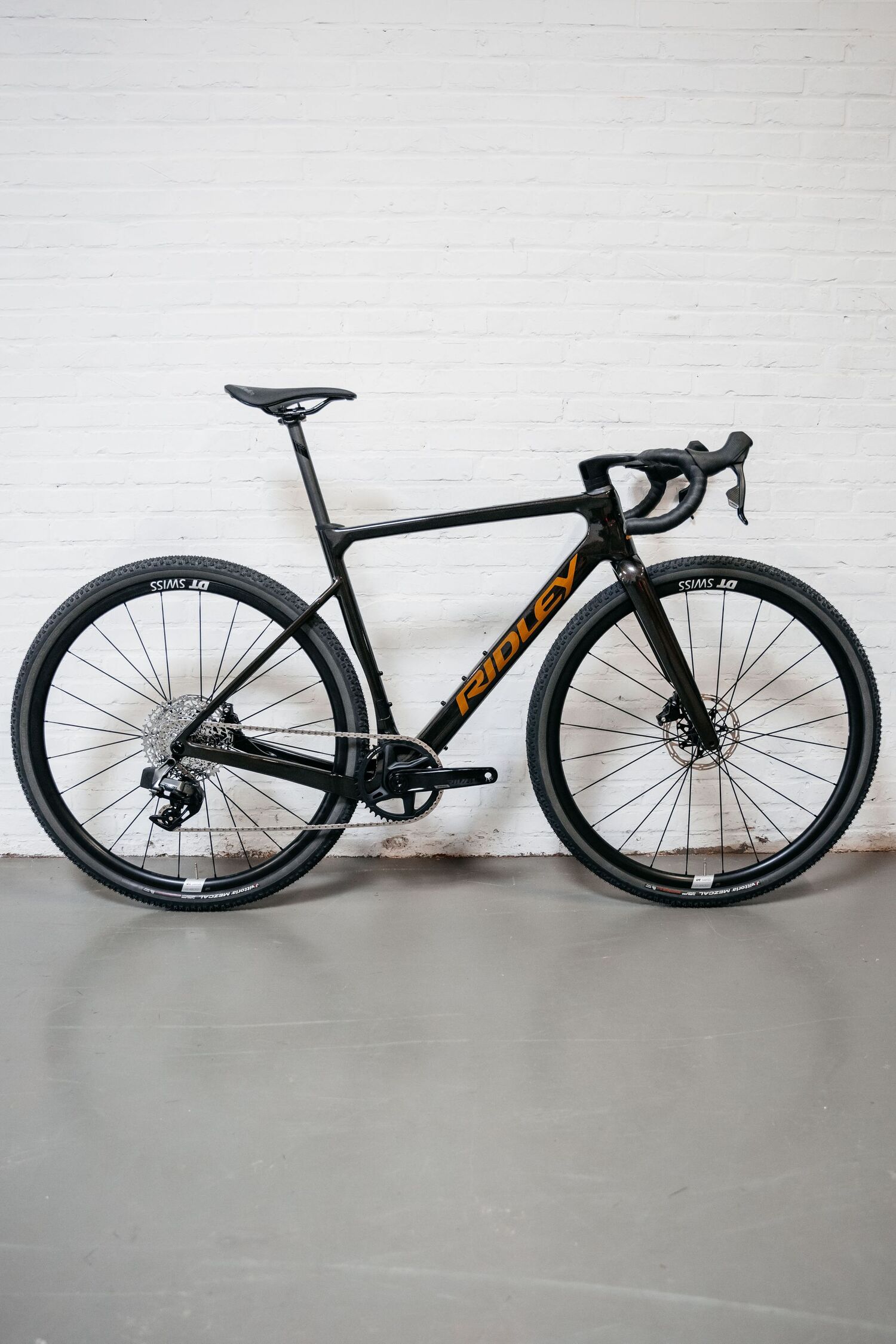
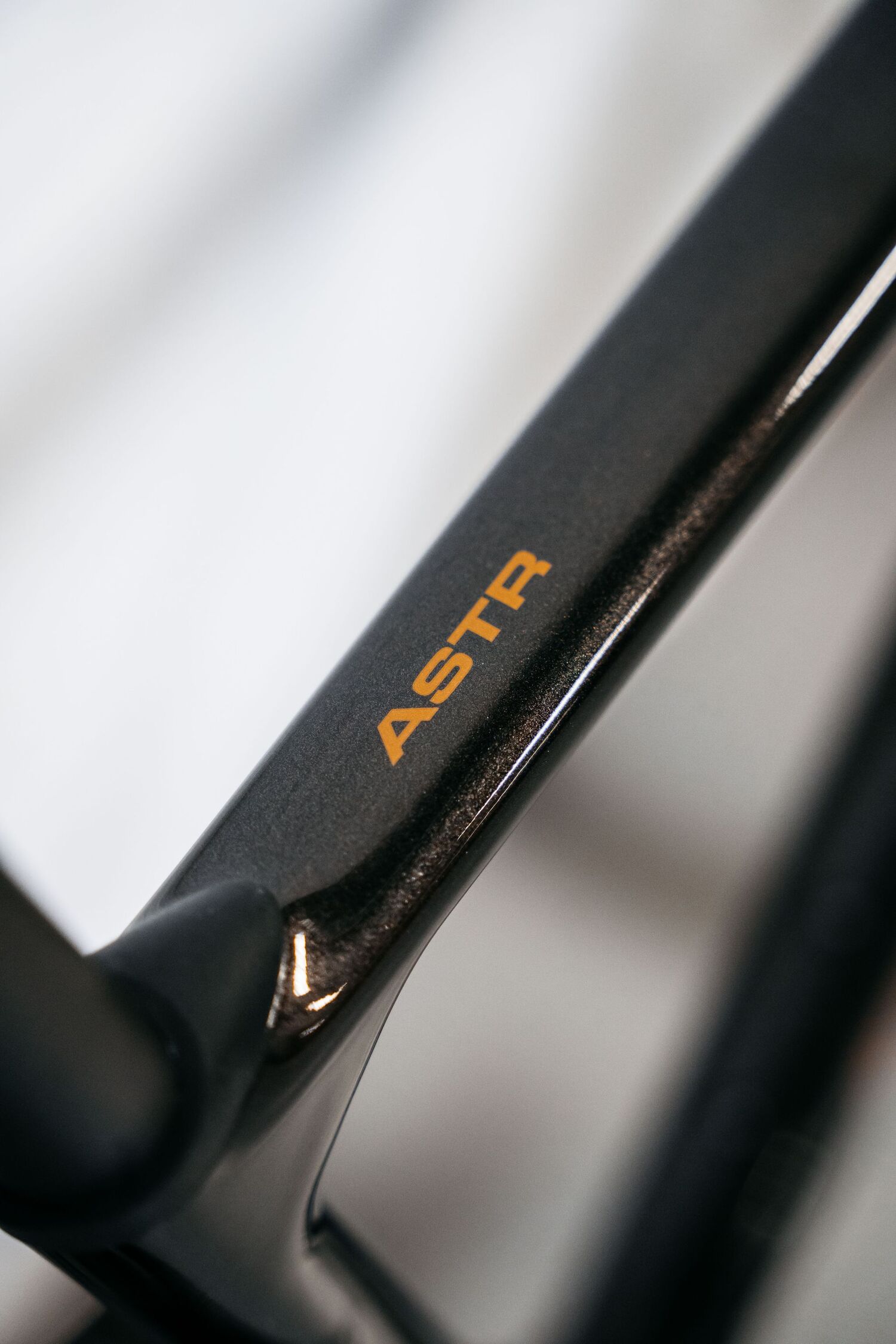
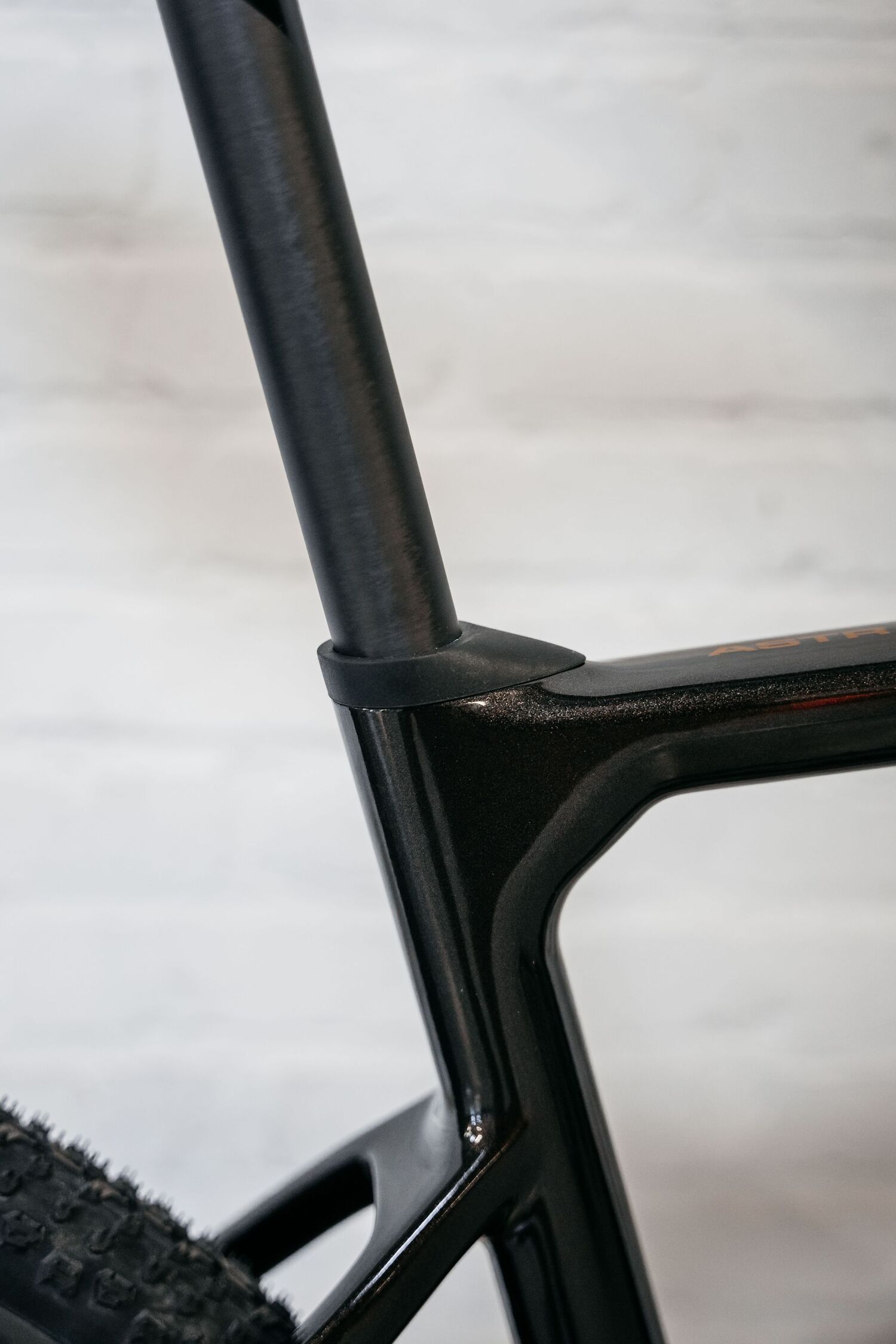
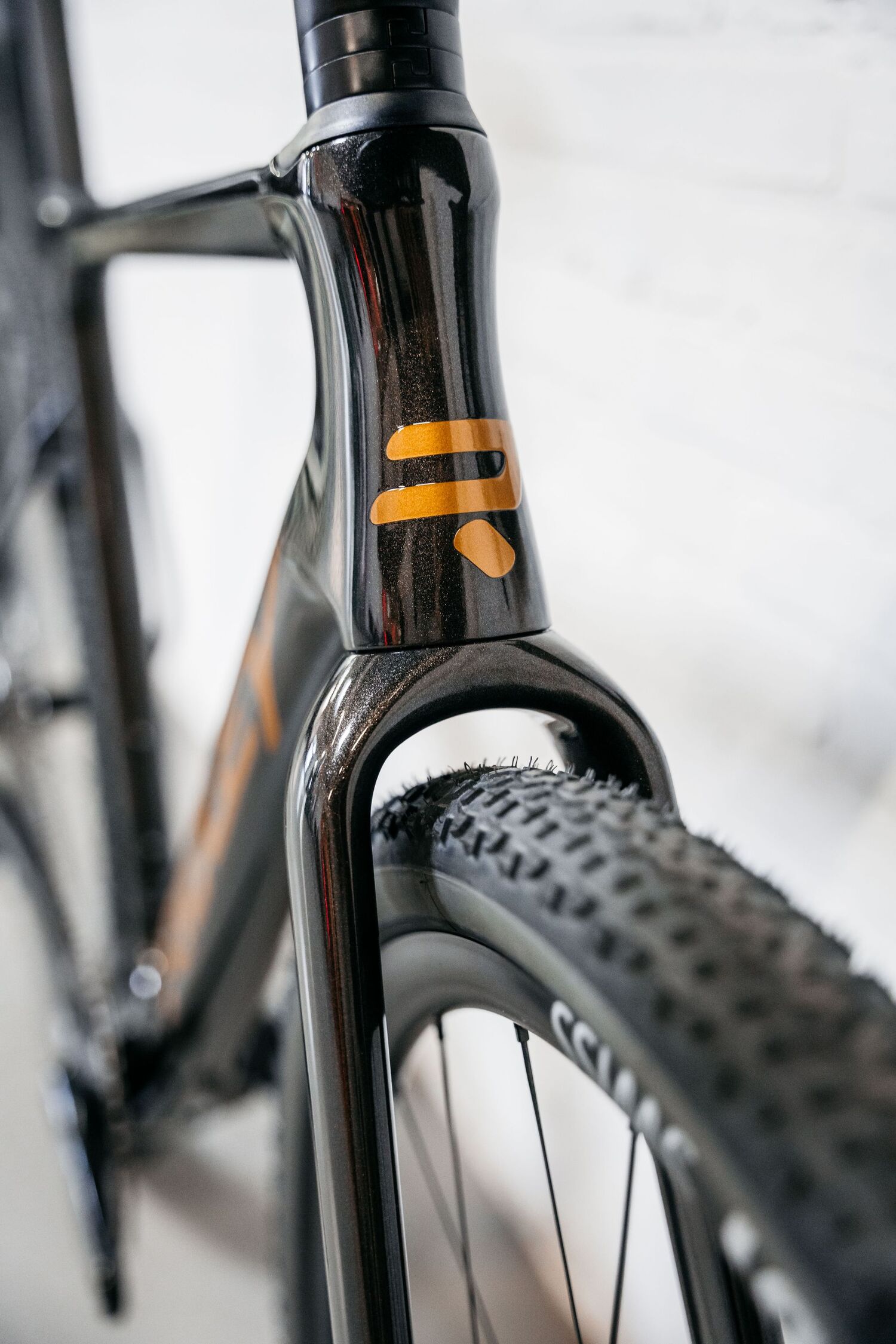
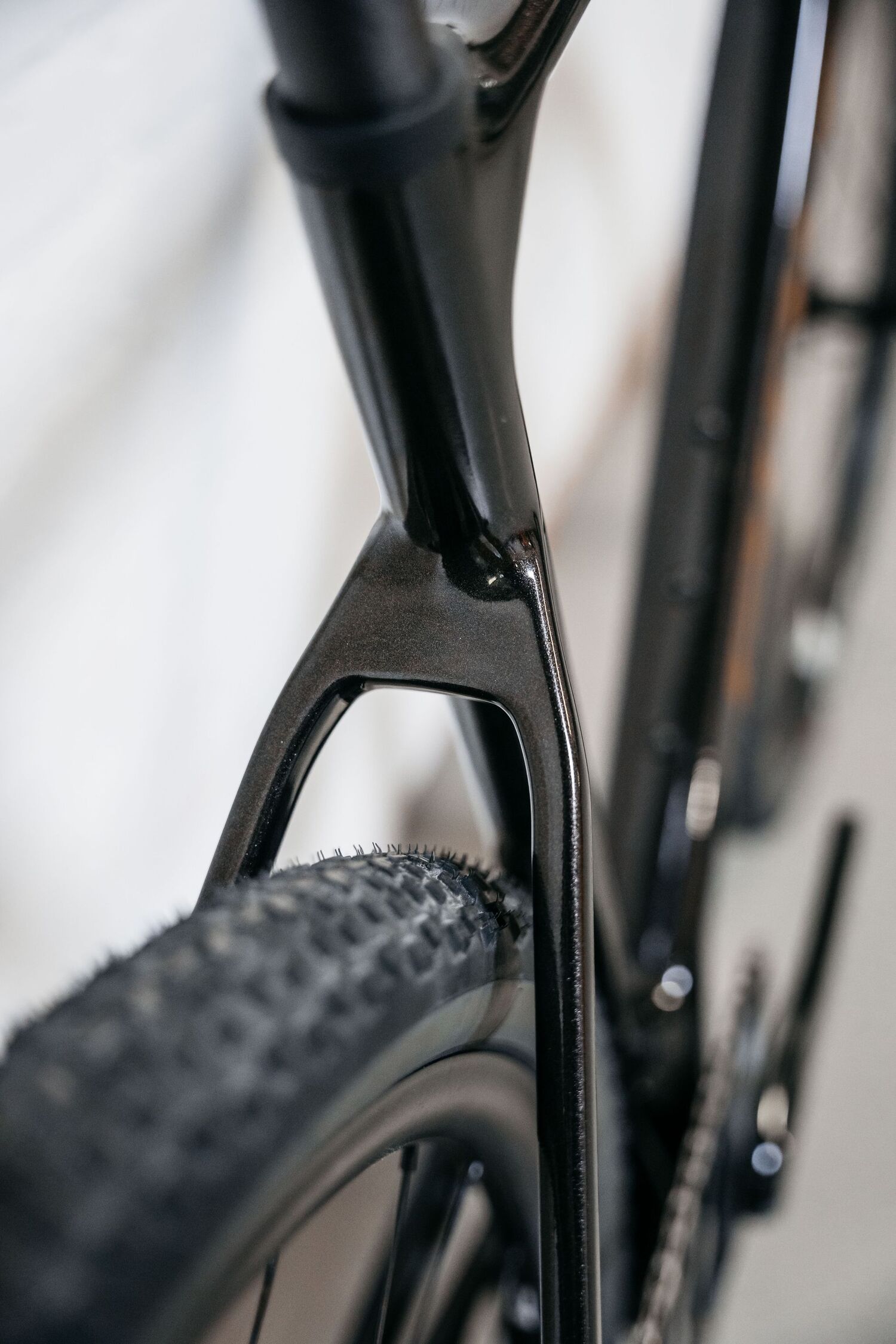

The ASTR transfers the full feature set of the ASTR RS to a distinctly more affordable price point – from the aerodynamic refinements to a modern gravel geometry. This build pairs the HM-carbon frameset with electronic Shimano GRX800 Di2 and presents itself in elegant black-bronze.
A video from an external video provider is displayed here. YouTube has its own cookies and may collect data on activities. Consent is required to view YouTube videos.
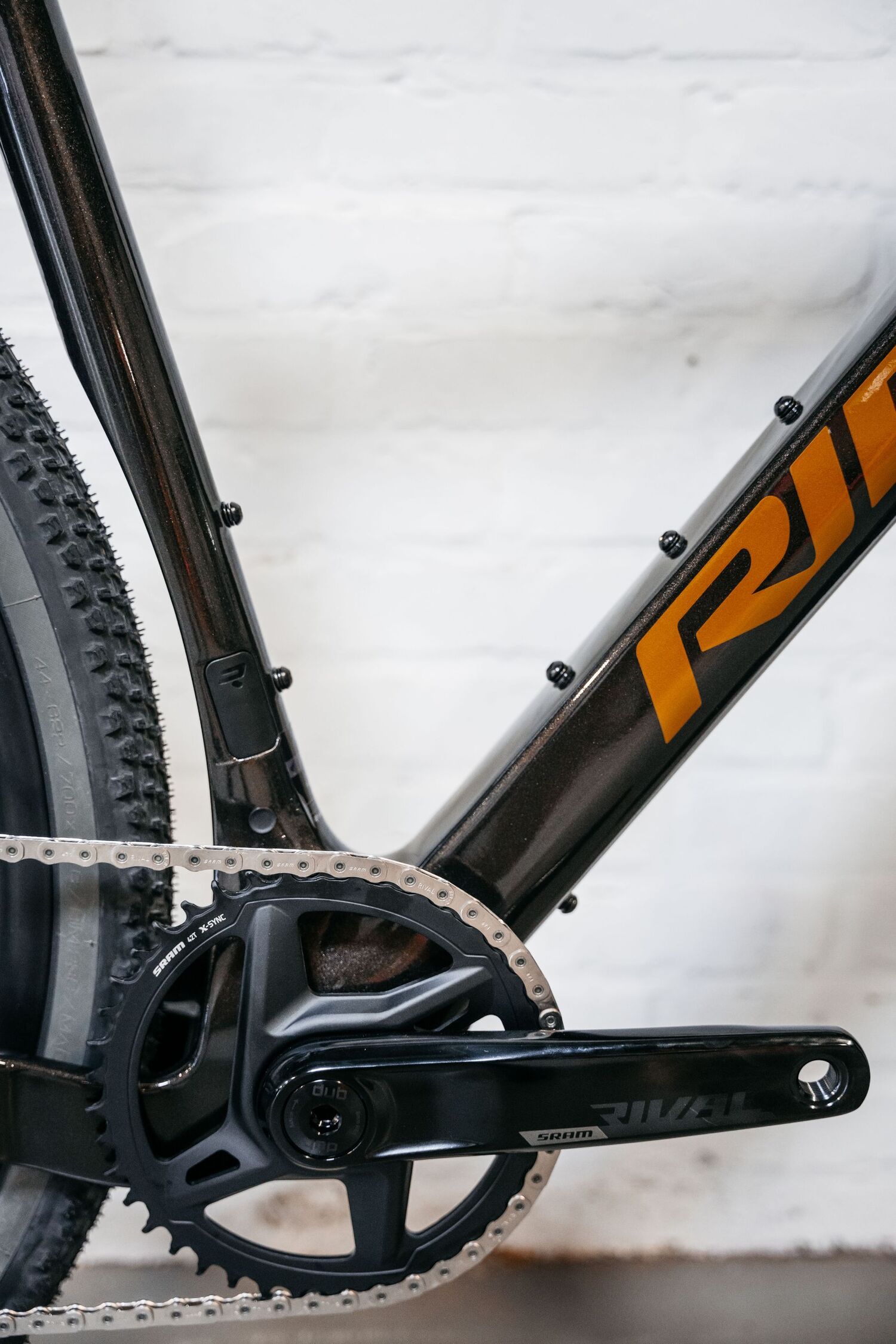
Enable Youtube videosThe ASTR delivers every virtue of the ASTR RS at a lower price – from the aero styling of the profiles to a race-worthy geometry. The frame is made of HM carbon with a BB86 bottom bracket, short chainstays and 47 mm of tyre clearance in the double-chainring format (the single-ring layout grows to 52 mm in the wheel). Propulsion comes from the Shimano GRX800 Di2 in a 2x setup: the electronic drivetrain mates the 48/31 GRX 820 crank to an Ultegra 11–34 cassette and thus provides 24 gears that shift synchronously and precisely, even under load. Lighting is neither provided nor intended, and rack eyelets are absent too; riders travelling light use aero frame and saddle bags with the matching mounts. Extras on board include the integrated Forza Cirrus Pro cockpit with a 16-degree flare, the tubeless-ready DT Swiss GRC1600 wheels with 42 mm depth, the Vittoria Terreno Dry tyres with tan sidewalls, the comfortable Selle Italia Novus Boost Superflow saddle and the round 4ZA Cirrus seatpost. The elegant Black Metallic finish with bronze-gold accents turns the bike into a head-turner; the XS frame size specifically addresses more compact riders.
ASTR stands as the platform's own family name for the whole line, pronounced "ASTor" and echoing the Latin "Aster" (star); the maker never published an official long form. GRX is the gravel component family of the drivetrain supplier, 800 its premium electronic stage within the group. Di2 is that maker's term for digital, battery-driven shifting without mechanical cables. 2x describes the arrangement of two chainrings – here 48/31 – for a wide gear range. Black Metallic/Bronze Gold marks the paintwork with a dark metallic base and bronze-toned gold details; XS, finally, is the smallest available frame size.
The ASTR family divides into the base, the RS and the E variant. The base ASTR runs HM carbon with aero-shaped tubes and a round seatpost and can be fitted mechanically or electronically; the RS model steps up to elite carbon, an aero seatpost and an integrated Nimbus Pro cockpit with electronics only; the E-ASTR adds an electric motor. Within the base programme this build takes the upper tier: while the GRX600 version works mechanically with two chainrings, this one shifts fully auto-tuned via Di2; the Apex AXS variant, in contrast, relies on a single-ring wireless drivetrain concept from SRAM. With its integrated Cirrus Pro cockpit and GRC1600 carbon wheels, this model manoeuvres as an elegant middle ground: full electronics, sporty equipment, a friendlier price than in the RS realm.
The intended use sits clearly in the sporting gravel segment: brisk rides, after-work laps and local as well as regional gravel events. The 47 mm tyres in the 2x layout balance grip and rolling resistance, while the Di2 electronics shift effortlessly and low-maintenance without cables – ideal when the kilometres add up. Unlike the tour-friendly Kanzo Adventure, conceived for bikepacking and lighting, the ASTR stays deliberately performance-trimmed; against the older Kanzo Fast it convinces with a newer aero generation and a wider tyre window. And unlike the everyday-oriented Grifn RS it does not target commuting but sporting hearts: riders wanting an electronically shifting, aerodynamically modern gravel bike without climbing into the RS world are best served here.
 Stevens 2026 AVIOLO 9.1 HT / Black Mercury
 Ridley ASTR RS Force XPLR 1x13 / UD Carbon/Silver