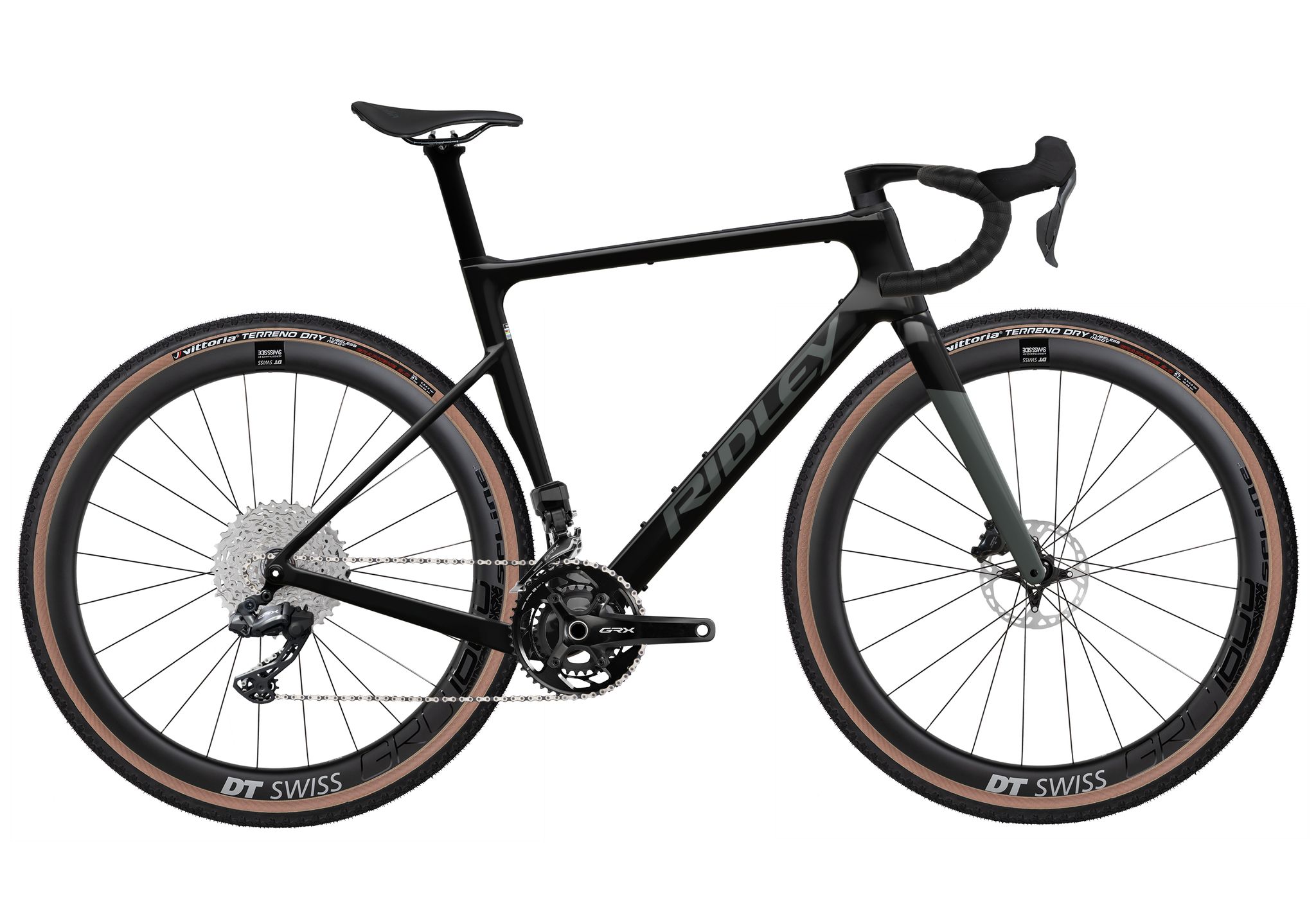
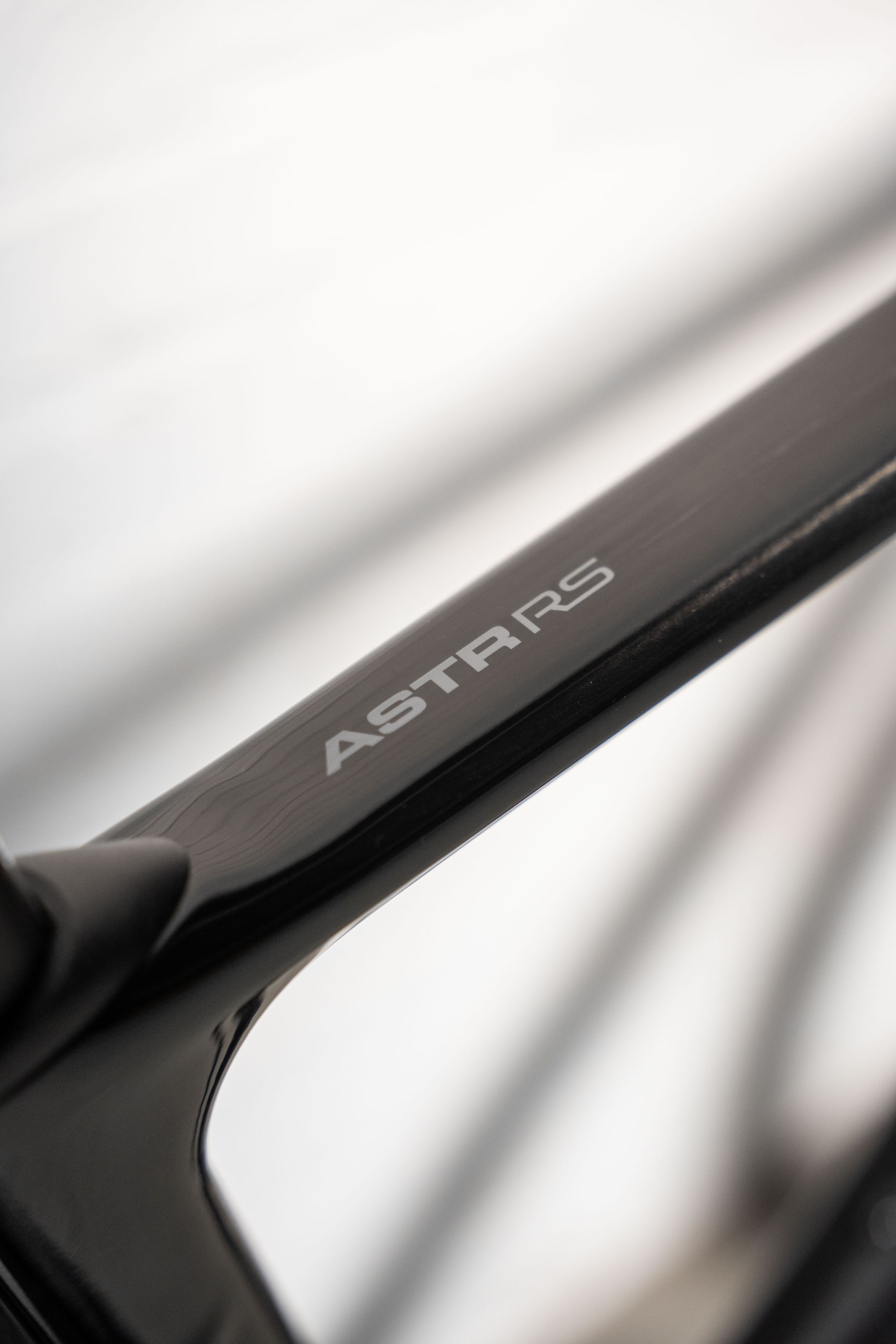
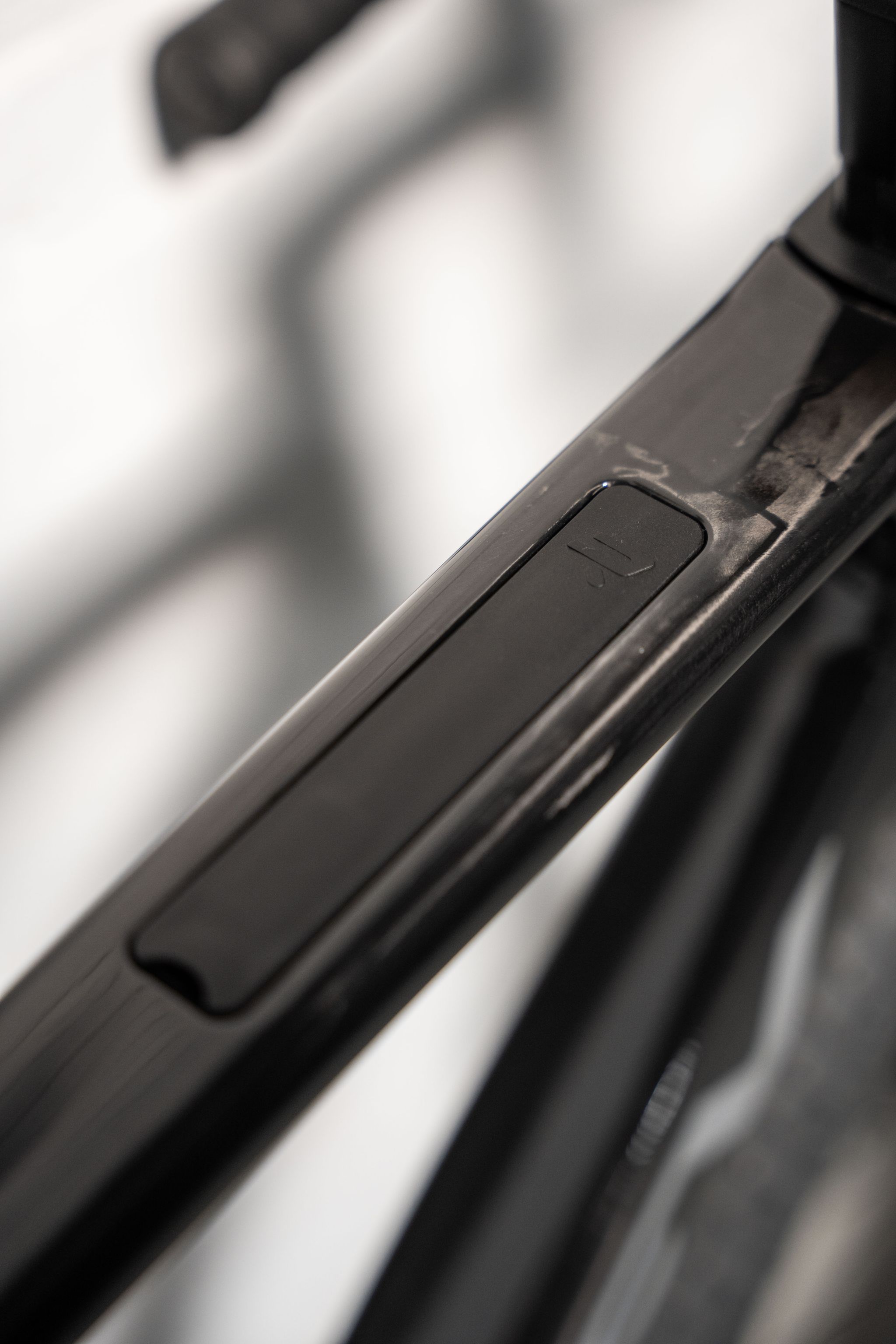
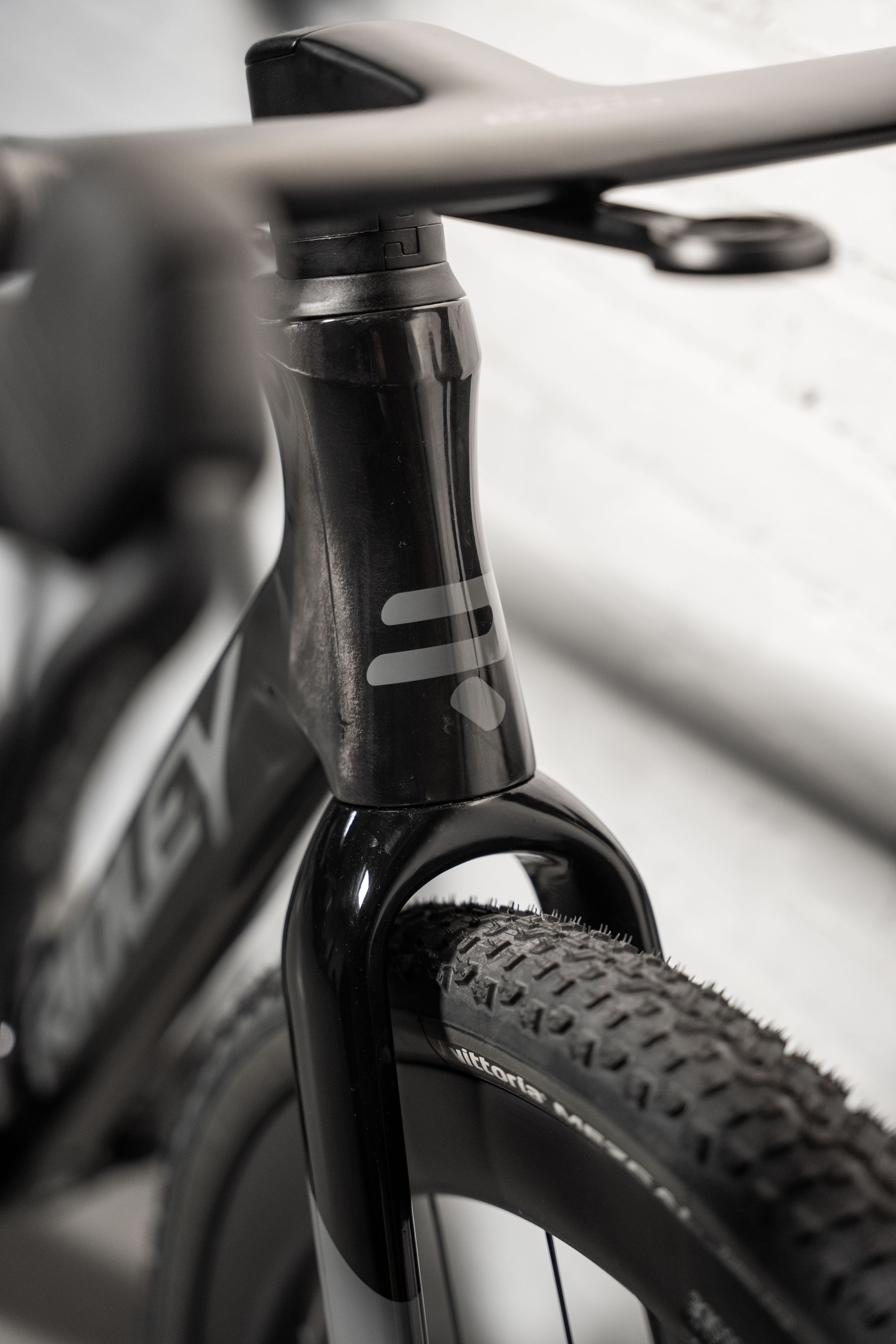
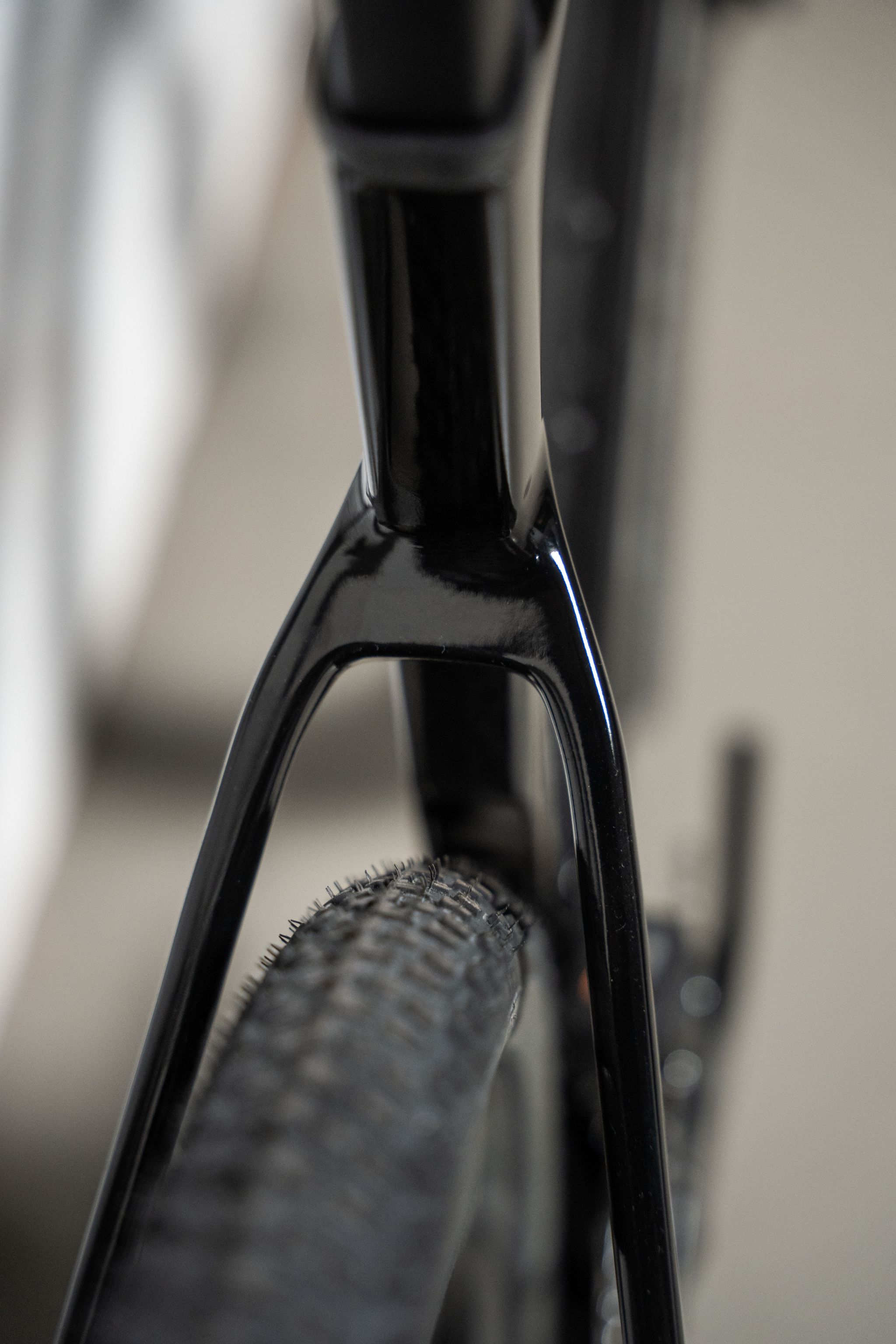
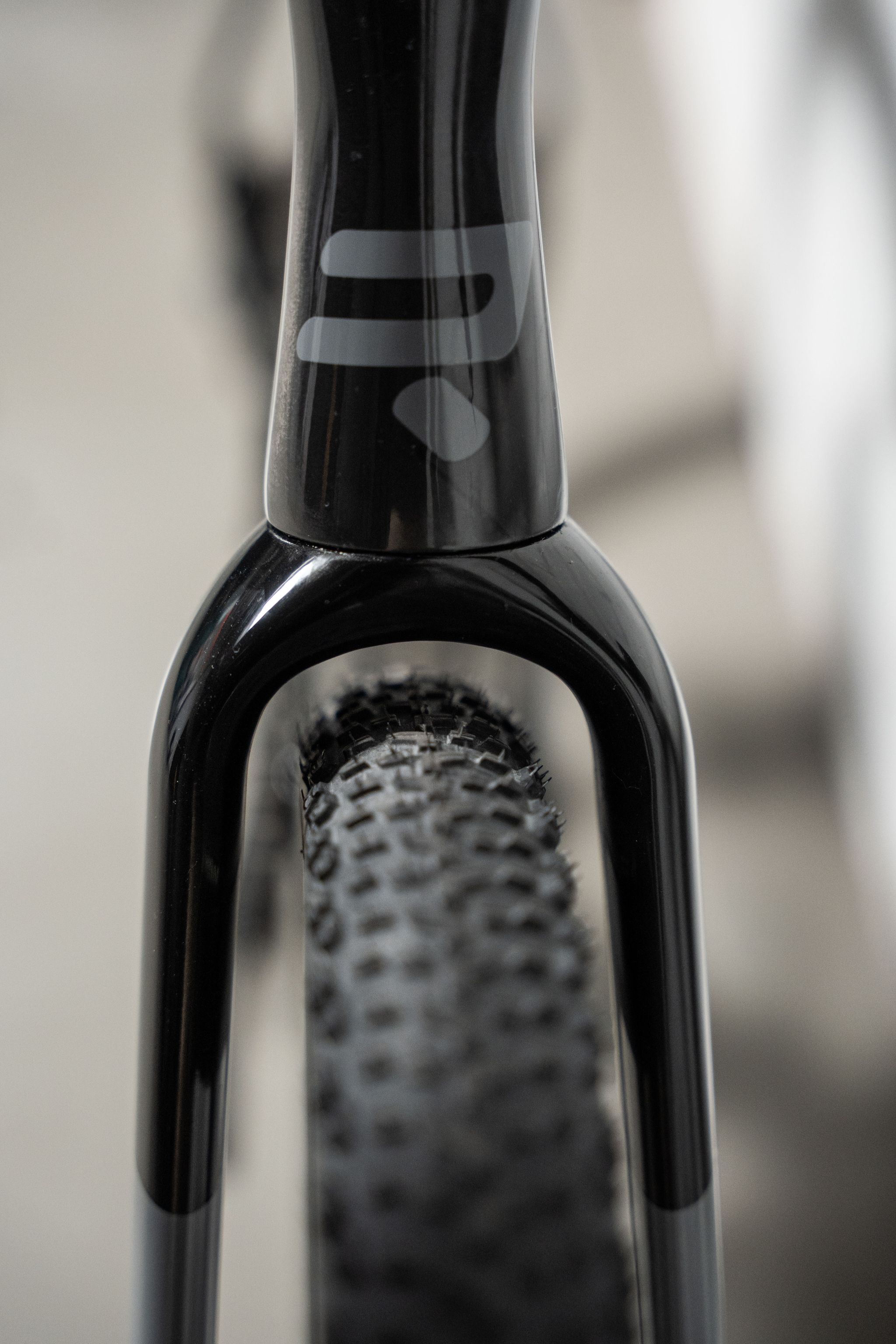
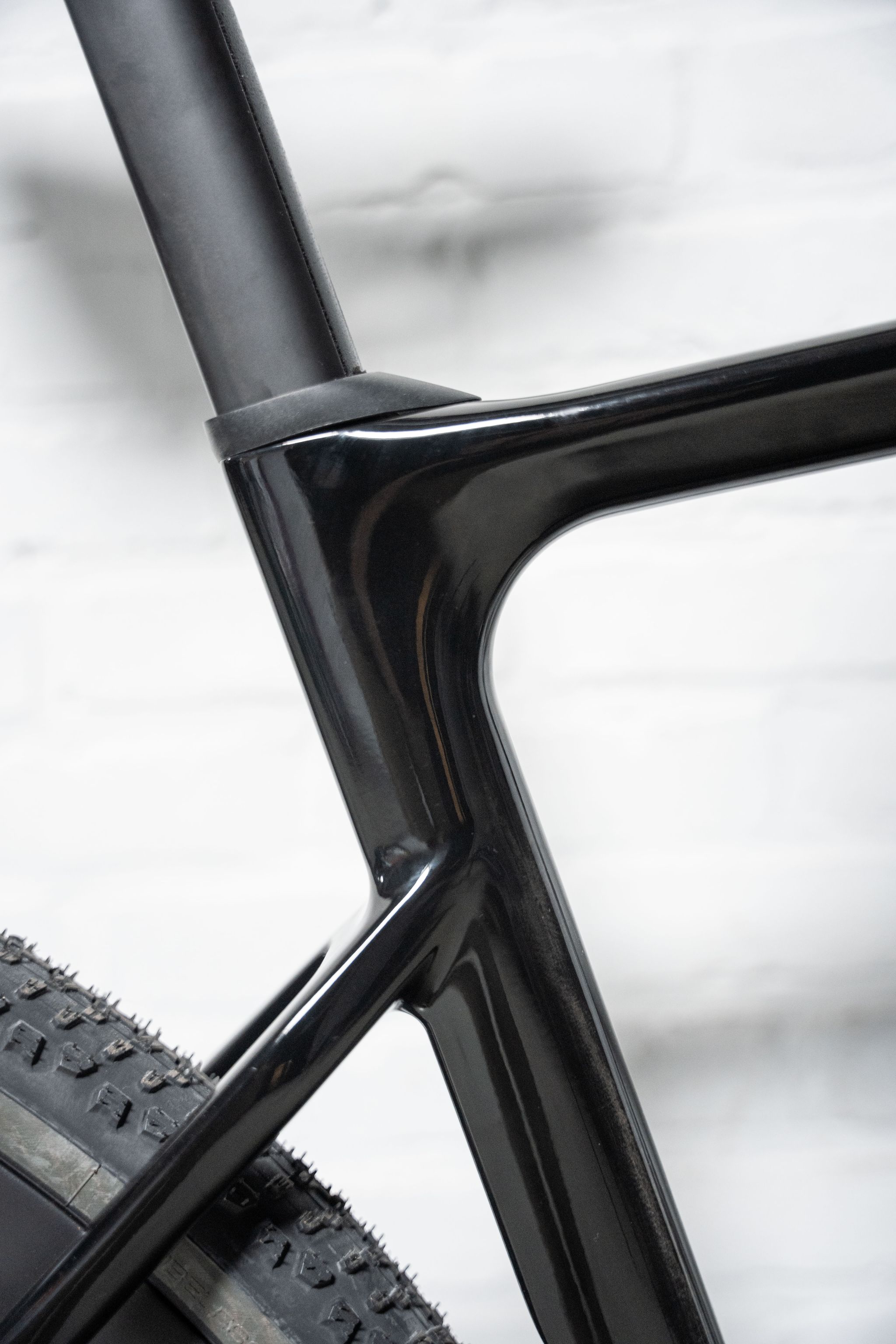

The ASTR RS combines aerodynamic efficiency with a low system weight in an exceptionally powerful package. This version relies on the electric Shimano GRX800 Di2 in a 2x format and presents the visible UD-carbon frame in a restrained dove-grey tone.
A video from an external video provider is displayed here. YouTube has its own cookies and may collect data on activities. Consent is required to view YouTube videos.
Enable Youtube videosThe ASTR RS is the performance flagship of the series and uses a frameset of elite-grade ultra-high-modulus carbon – a featherweight base around 890 grams (size M) with aerodynamically shaped tubes and a fork featuring an integrated diffuser from the FALCN RS aero-to-weight study. Tyre clearance reaches 52 mm in single-ring operation and 47 mm in twin-ring mode. The drivetrain is the Shimano GRX800 Di2 in a 2x layout: the GRX 820 crank with 48/31 ratios feeds an Ultegra 11–34 cassette, producing 24 gears that shift electronically in sync and precisely even under load – without cables and with automatic front-mech timing. Lighting is as little intended as racks; riders who want to stow something on the road use the aero frame and saddle bags with Apidura mounts. Highlights include the fully integrated Forza Nimbus Pro cockpit in Stealth Black, the Forza aero seatpost, the 42 mm deep DT Swiss GRC1600 wheels, the Vittoria Terreno Dry tyres with light sidewalls and the Selle Italia Novus Boost Superflow saddle. The Dove Grey name colour covers the unidirectional carbon in a discreet pigeon-grey lacquer; the XS frame size addresses more compact riders.
ASTR is the platform's own name for the whole range, pronounced "ASTor" and echoing the Latin "Aster" (star); the maker published no official long form. RS is the official abbreviation for "Racing Sport" and marks the strongest model. GRX means the gravel component family of the drivetrain partner, 800 its premium electronic stage. Di2 is that partner's hallmark for digital shifting; 2x names the twin-chainring arrangement. UD carbon points to the visibly unidirectional fibre structure, Dove Grey to the pigeon-grey paint tone; XS denotes the smallest frame size.
The ASTR family splits into three branches: base, RS and E variant. While the base ASTR runs HM carbon, a round seatpost and groupsets that can be mechanical or electronic, the RS relies on elite carbon, an aero seatpost and the fully integrated Nimbus Pro cockpit with electronics only; the E-ASTR adds an electric motor. Within the RS line this is the Shimano version: the Force XPLR variant shifts wirelessly with a single chainring and 13 gears, the Red model uses SRAM's top class, and this build rides electronically with twin rings, 24 gears and the mature Di2 ecosystem. In the calm dove-grey look over visible UD laminate it positions itself as a composed, unruffled alternative to the richly coloured sisters.
The intended use is clearly modern gravel racing: a longer wheelbase, a slacker head angle and a lower bottom bracket inspire confidence at speed, the low front end encourages an aero stance, and the wide tyres lower rolling resistance. The Di2 system makes shifting predictable and low-maintenance – ideal when kilometres and nerves are under strain. Unlike the tour-oriented Kanzo Adventure with racks, mudguards and lighting systems, this RS is a pure performance machine; against the older Kanzo Fast it profits from newer aero development and more tyre clearance. Riders seeking an electronically precise, aerodynamically modern gravel bike for training and competition find a reliable partner in the ASTR RS GRX Di2.
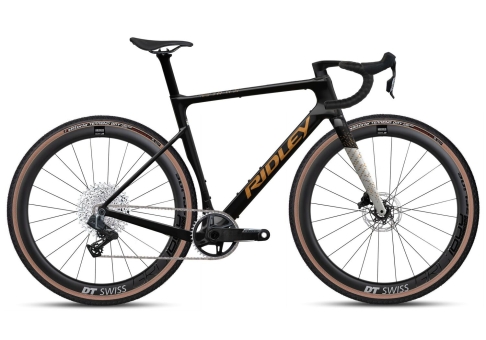 Ridley ASTR RS Force XPLR 1x13 / UD Carbon/Silver
 Ridley ASTR GRX800 DI2 2x / Black Metallic/Bronze Gold
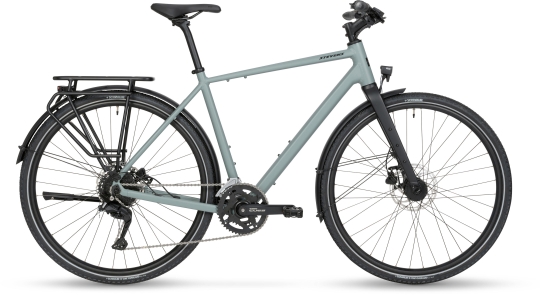
 Stevens 2026 AVIOLO 9.1 HT / Black Mercury