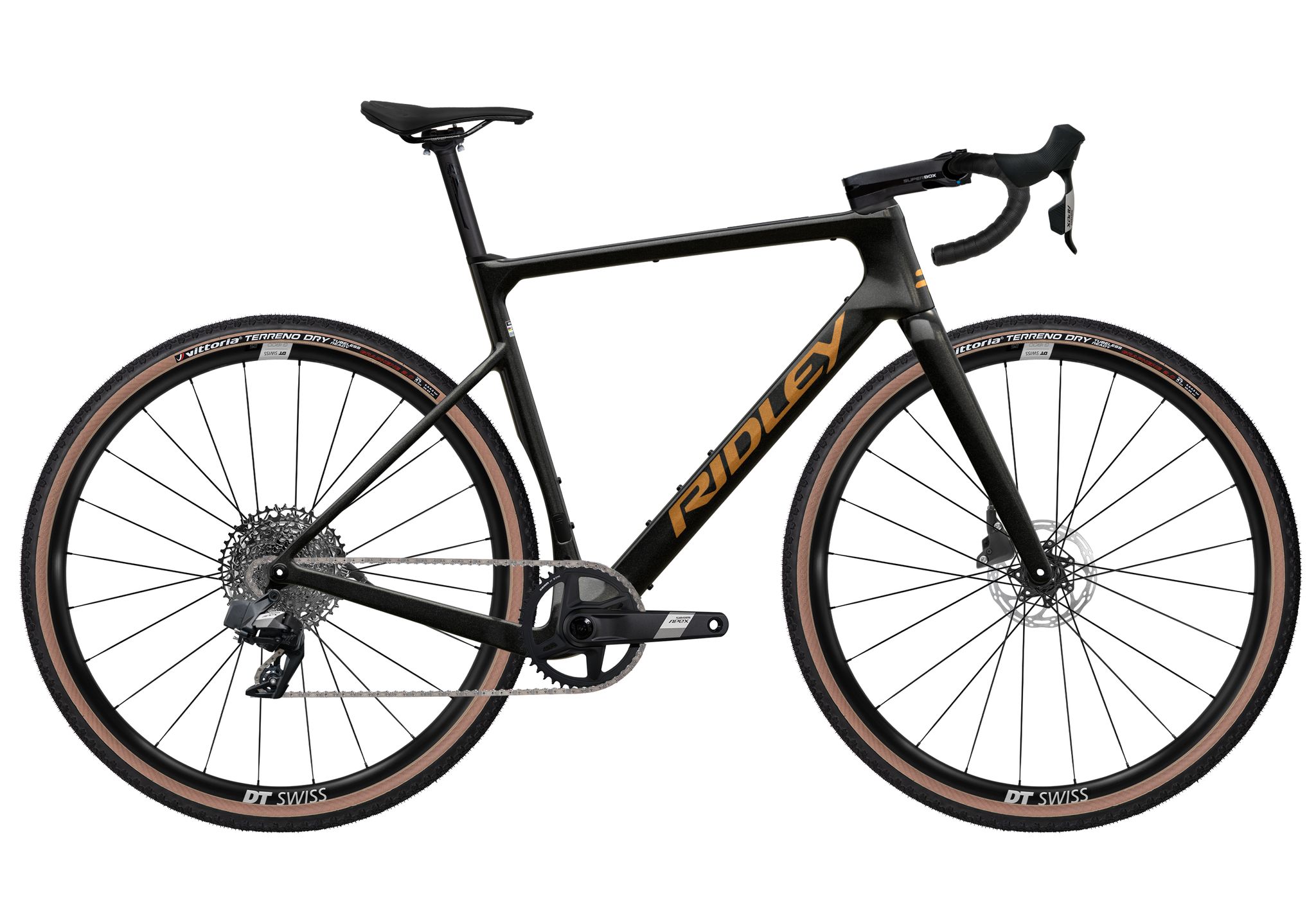
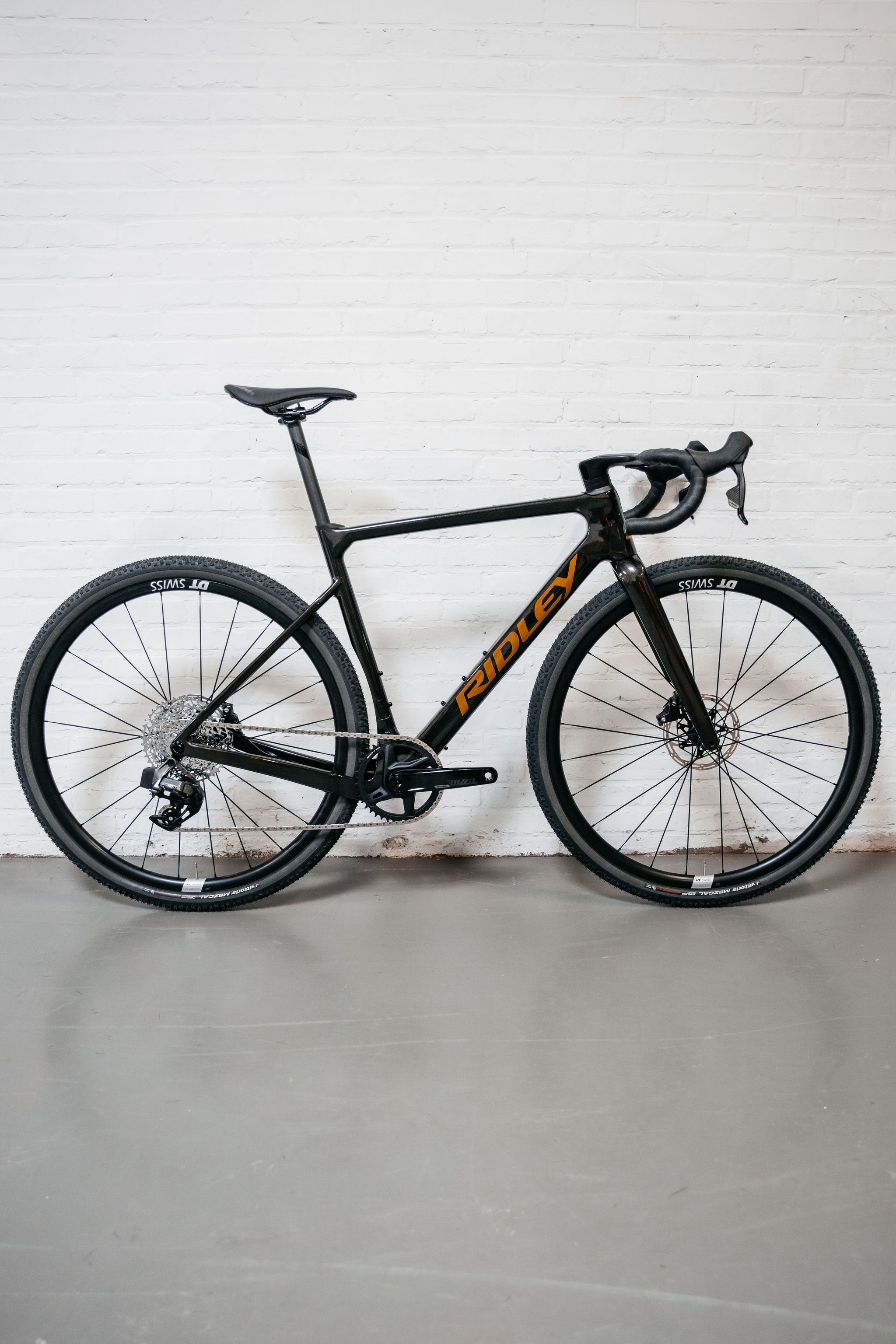
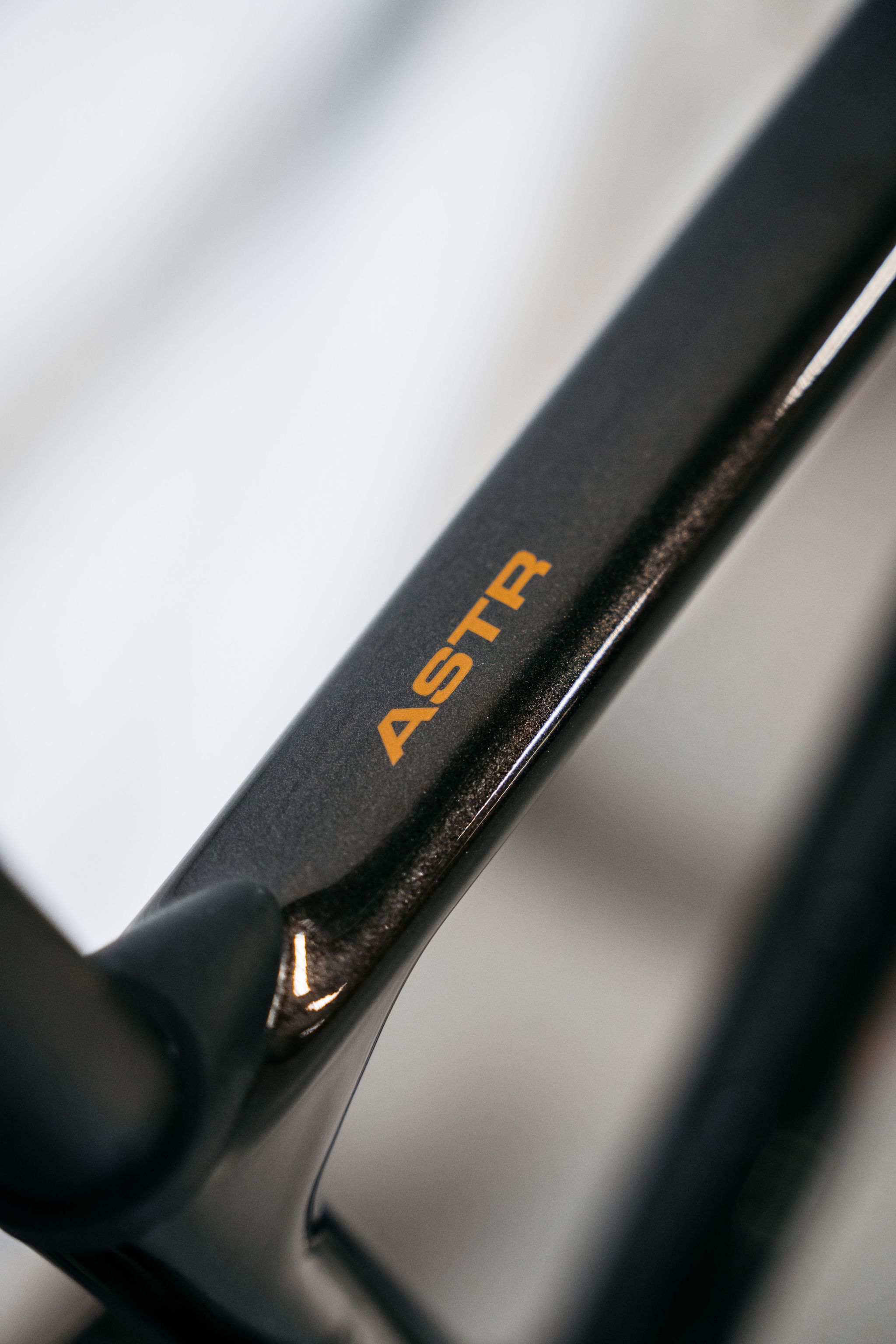
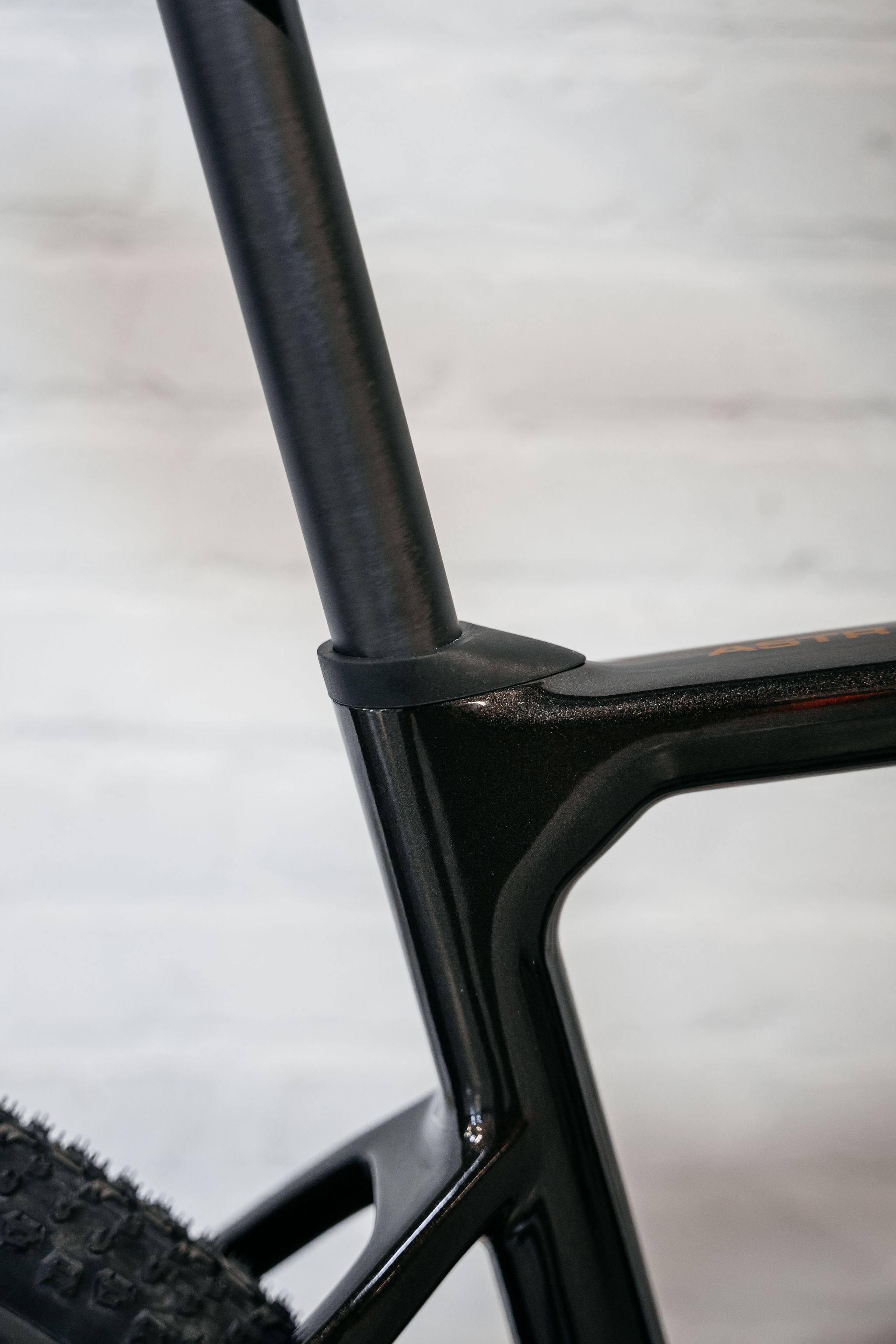
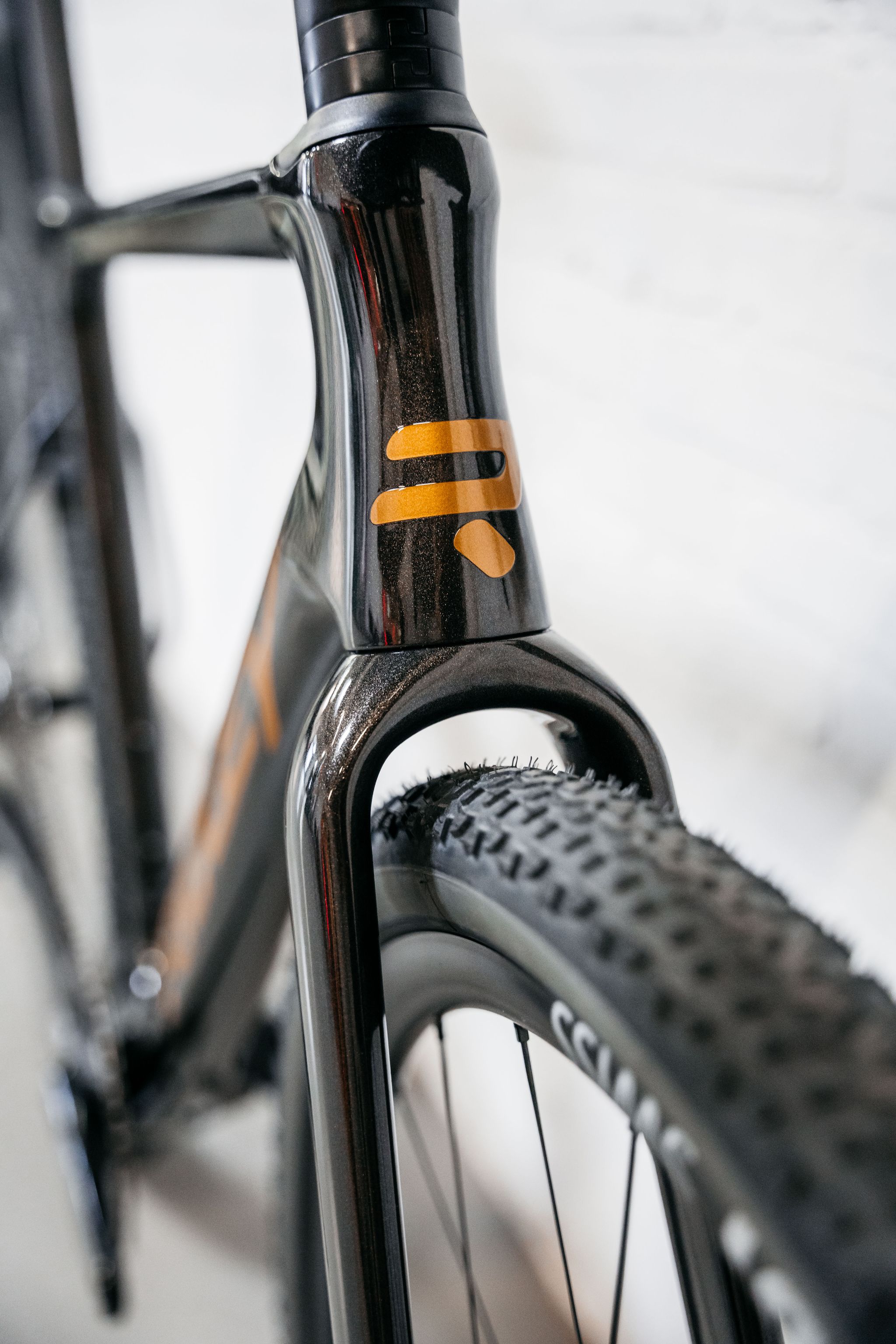
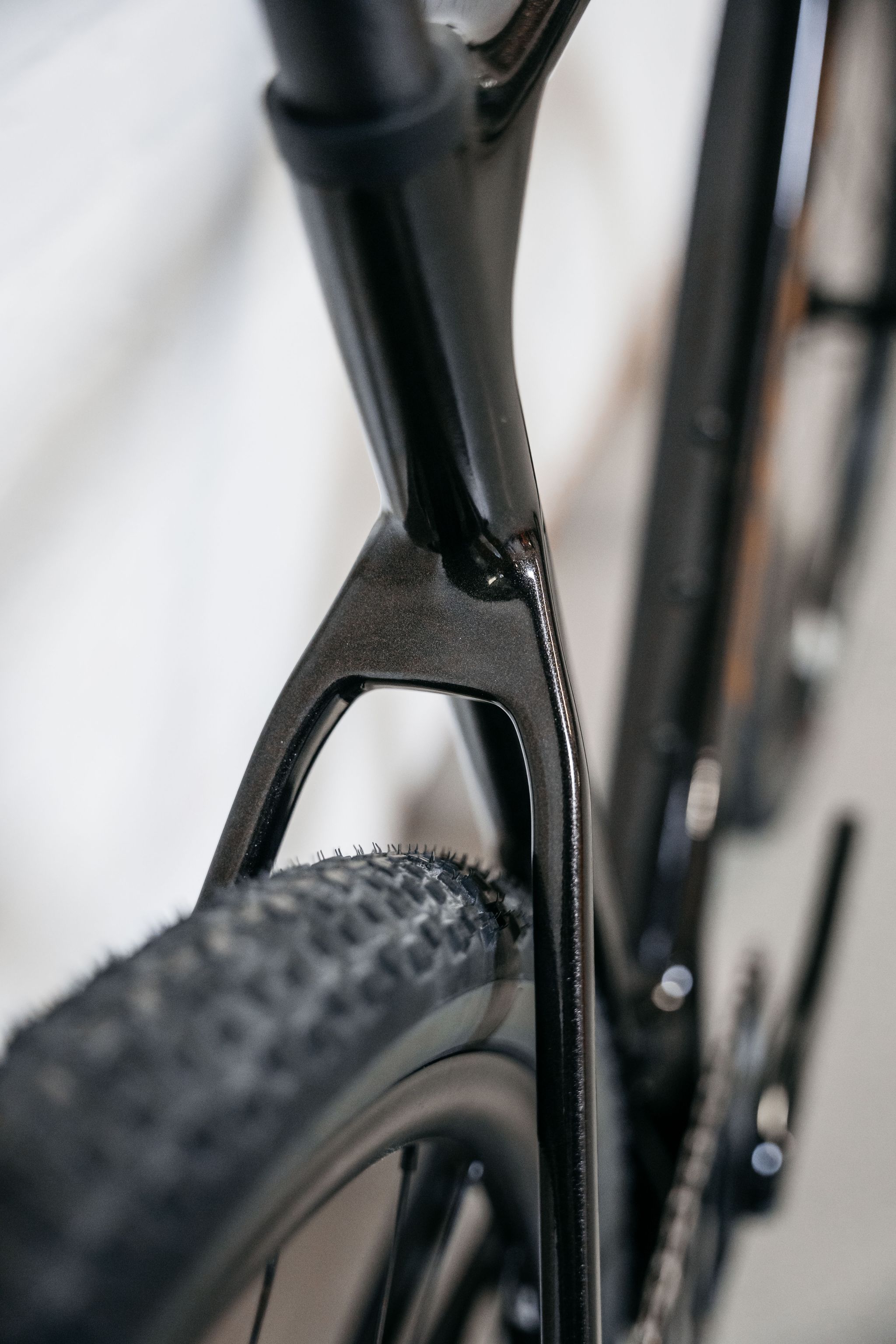
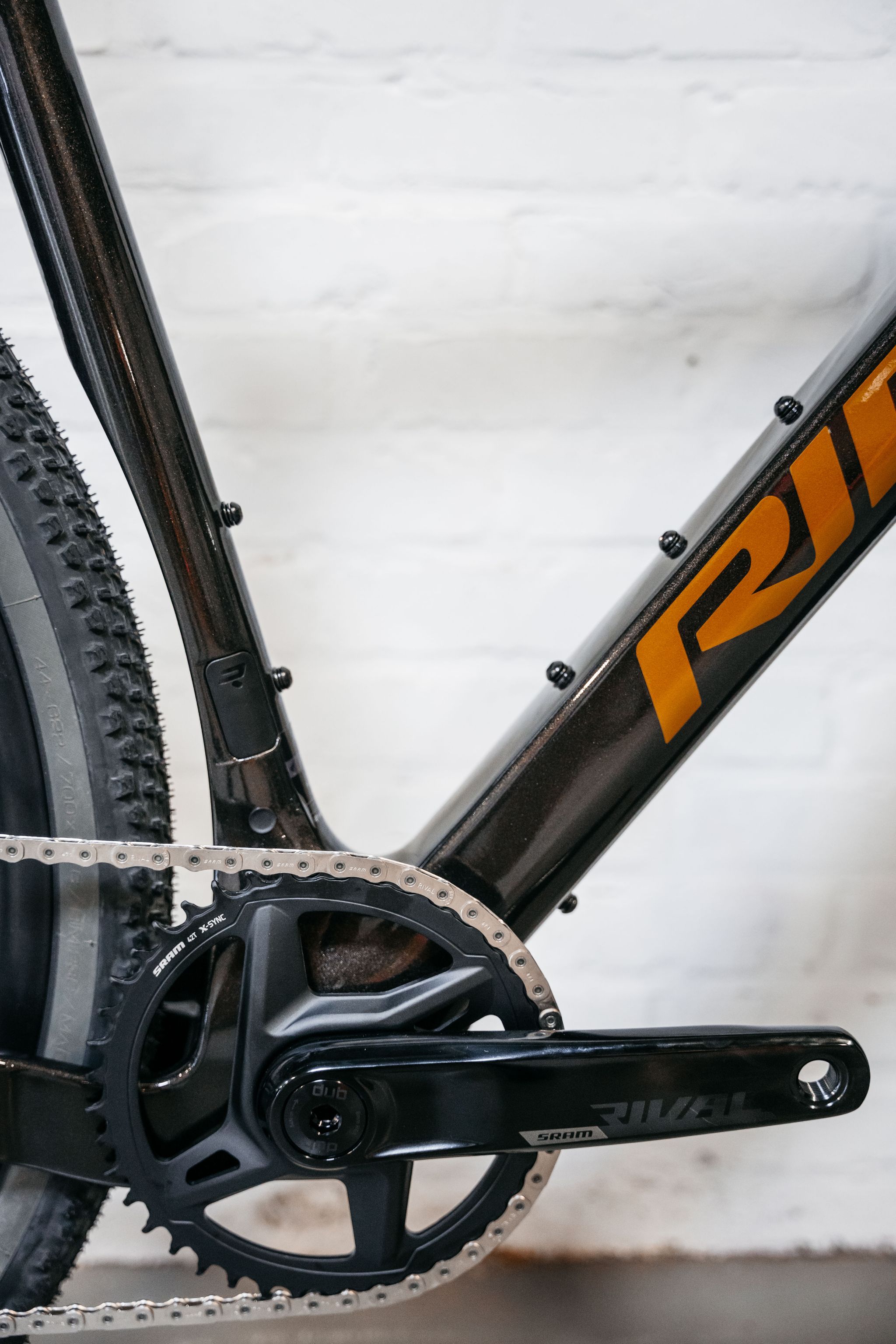

Anyone who wants the racing substance of the ASTR RS without the full budget – and without spending on high-tech cockpits – finds the smart gateway in this model: the ASTR places the platform's complete aero and race geometry at the service of an affordable price point. The Black Metallic/Bronze Gold paintwork gives the frame an elegant, almost festive two-tone look.
A video from an external video provider is displayed here. YouTube has its own cookies and may collect data on activities. Consent is required to view YouTube videos.
Enable Youtube videosThe frame is made of HM carbon with short chainstays, a low bottom bracket, a 71.5-degree head angle, a steeper 74-degree seat tube and tyre clearance that frees up to 52 millimetres in single-ring and 47 millimetres in twin-ring setup. Shifting is handled by SRAM Apex XPLR AXS 1x12: the entry ensemble comprises the 42-tooth crank in 172 mm length, the XPLR AXS derailleur and an 11–44 cassette – twelve gears in total, all radio-actuated and cable-free on the frame. On the DT Swiss G1800 Spline wheels (25 mm deep, 24 mm internal width) run Vittoria Terreno Dry tyres in 700x47c with sand-coloured sidewalls. Steering comes from the Deda Superzero alloy gravel bar with a 16-degree flare on a Deda Super Box stem; the seatpost is a 4ZA Cirrus without offset, the saddle from S.S.Marco (Shortfit Open-fit 2.0 Start Up). There is no lighting – instead the usual mounts for aero bags remain, so bikepacking excursions stay possible. The gloss-black metallic surface with golden accents looks especially sovereign in the XL frame size.
ASTR is the name of the entire gravel platform, pronounced "ASTor" and echoing the Latin "Aster" (star); no official long form exists. Apex is the entry class of the supplier's electronic groups, XPLR its gravel division ("Explore") and AXS the radio-based protocol. 1x12 describes the concept of one chainring with twelve sprockets. Black Metallic/Bronze Gold names the black-metallic coat with bronze-golden details – two tones that play together elegantly.
Unlike the Force, Red and GRX builds, this model runs the leanest component selection: an alloy bar from Deda replaces the integrated carbon cockpit, the G1800 hoops from DT Swiss replace deep-section aero wheels and the saddle bears the S.S.Marco name instead of Selle Italia. At the same time it keeps the identical ASTR base with its competitive geometries, the carbon diffuser in the name of more aero and the same tyre clearance. So the core of the platform stays the same – just without premium labels, and with more sense left in the wallet. Reducing to twelve gears also works out measurably cheaper than the 13-speeds in the RS.
This machine suits brisk after-work loops, ambitious gravel outings and local races on changing ground – bundling the platform qualities as affordably as possible. The wireless drivetrain eases maintenance, the 47 mm tyres filter bumps and the lively steering rewards every corner. If you instead set out on multi-week tours with tents and lights, the Kanzo Adventure delivers, bringing power supply and racks; the older Kanzo Fast again sits closer to race use but cannot offer 47 mm of clearance. Exactly there this ASTR plays its cards: in essence it is the ticket to a competitive gravel bike for all fans of classic build wisdom with wireless fine-tuning.
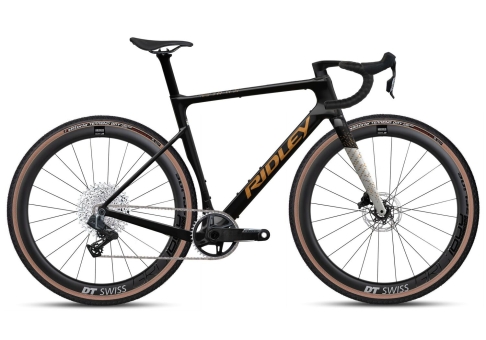 Ridley ASTR RS Force XPLR 1x13 / UD Carbon/Silver
 Stevens 2026 AVIOLO 9.1 HT / Black Mercury
 Ridley ASTR GRX800 DI2 2x / Black Metallic/Bronze Gold